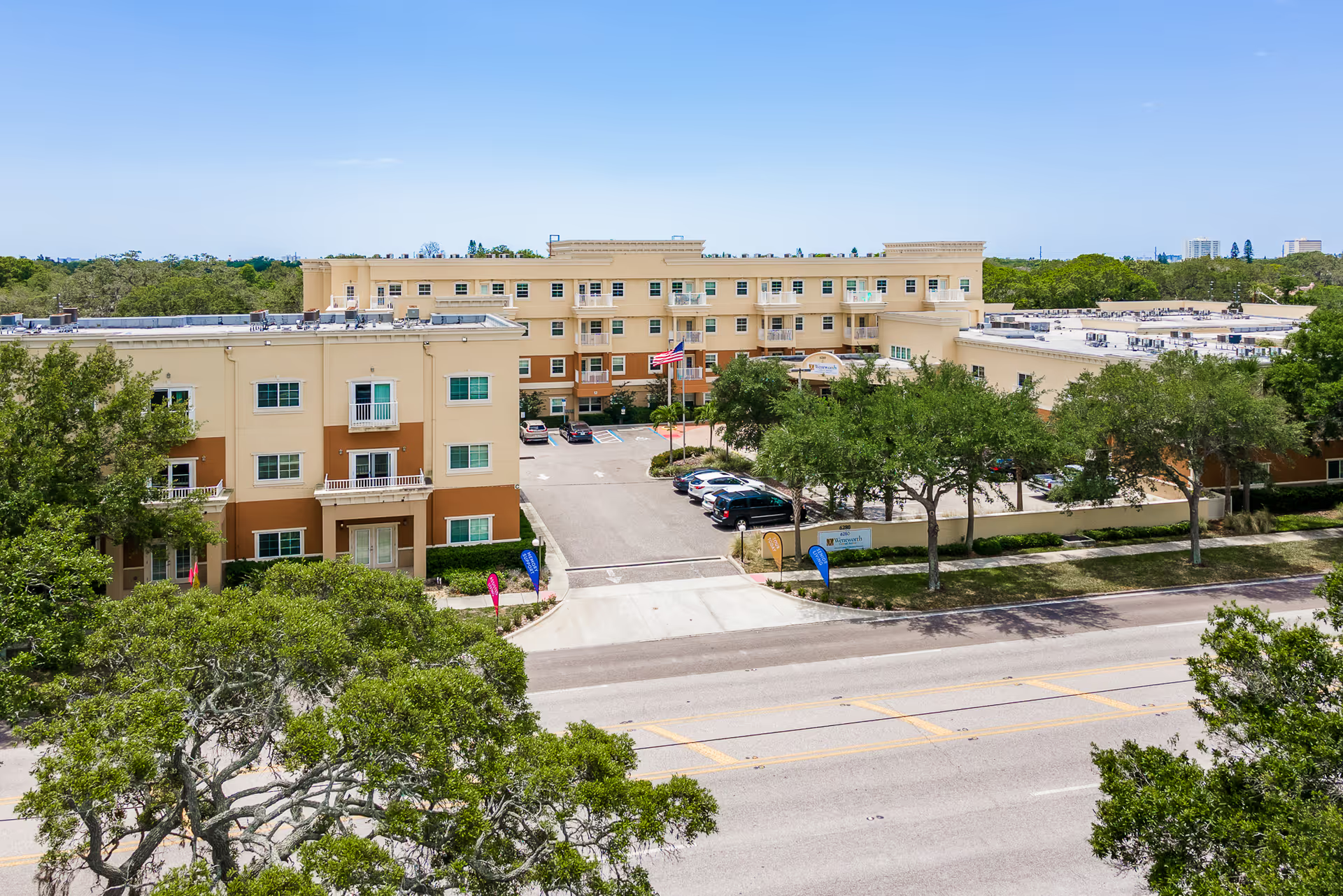
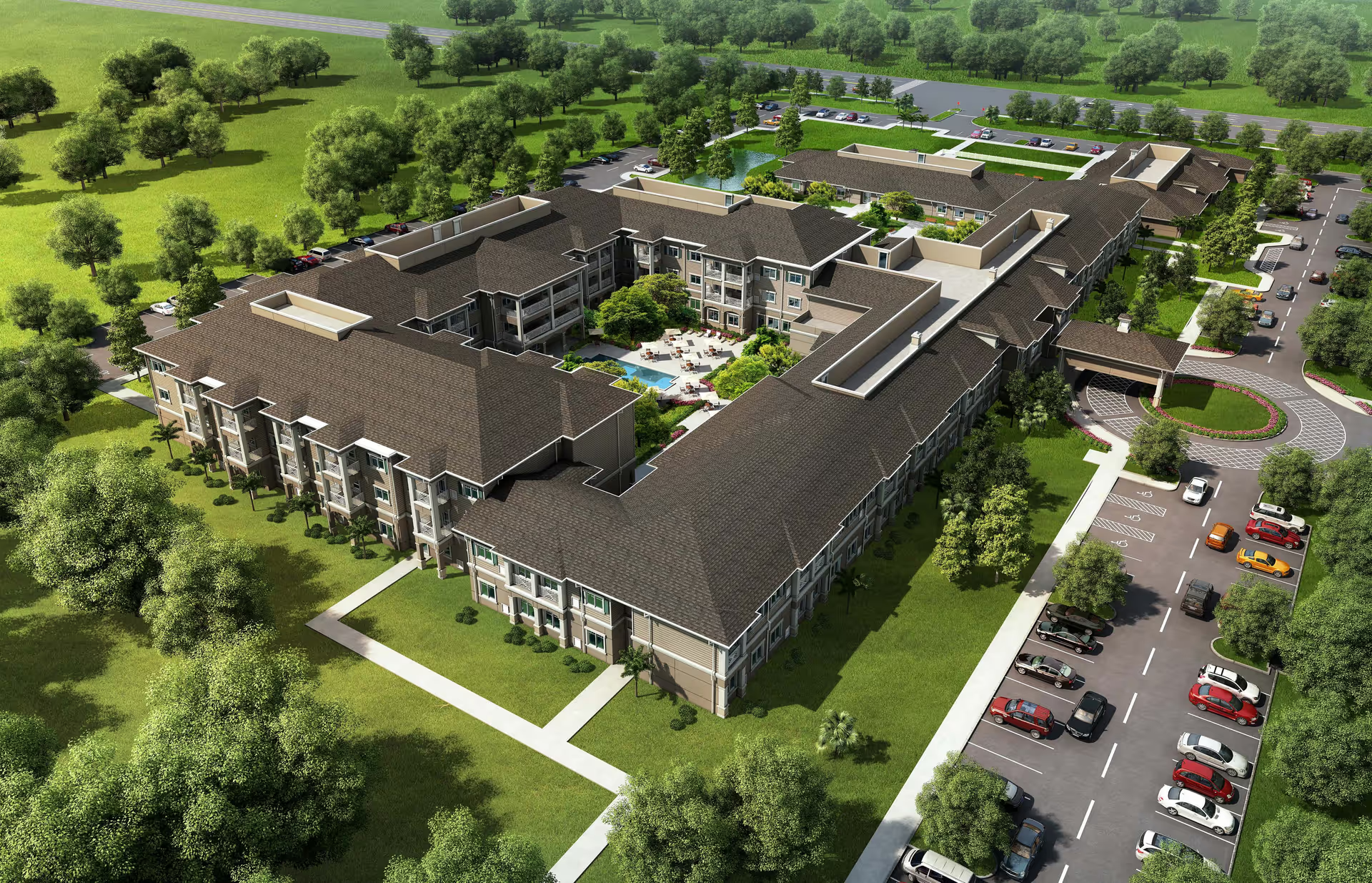
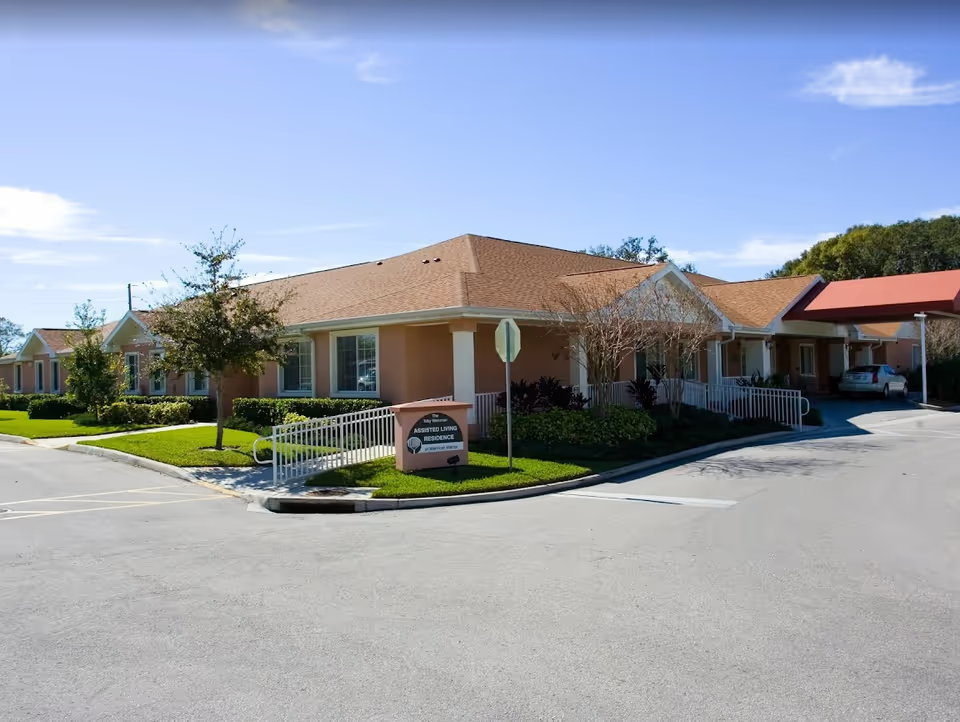
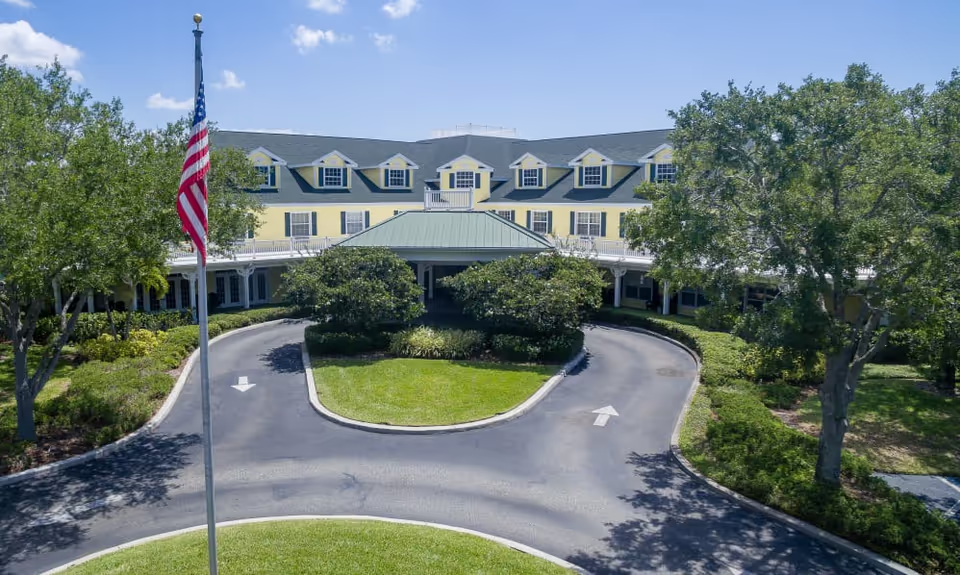
Overall impression Elancé at The Barclay/related campuses presents as a waterfront, full-service senior community with substantial strengths in staffing culture, social programming, and amenities. Reviewers commonly highlight compassionate and attentive direct-care and hospitality teams; many families cite positive onboarding experiences, welcome gestures, and helpful move-in coordination. The community offers a broad activity calendar, organized outings, and on-site features such as a movie theater, pool, gym, salon, and rehabilitation services that support an engaged independent-living lifestyle. Multiple levels of care on campus and formal emergency planning are also noted as strengths.
Care and clinical services Care quality descriptions are mixed. Numerous accounts praise memory-care and long-term caregiving staff for compassion, stability, and good communication with families. Conversely, there are persistent concerns about clinical consistency: examples include delayed call-button responses, missed medication doses, missed or delayed personal-care tasks, and variability in clinical attention during certain shifts. Several reviewers advised that residents with higher medical complexity may require closer clinical oversight than the community consistently provides. Rehabilitation and physical-therapy programs, when available, are described positively.
Staff and culture Staff are the community’s most frequently cited asset. Many comments describe staff who are kind, responsive, and personally engaged with residents; residents being addressed by name and forming friendships is a recurring theme. At the same time, reviewers point to staffing variability and turnover in some departments (housekeeping, dining, nursing) that can degrade service continuity. Communication strengths and weaknesses both appear: some families report proactive, accessible leadership and clear follow-up, while others note unreturned calls, missed paperwork, and inconsistent administrative follow-through.
Dining and hospitality Dining impressions vary widely. Several reviewers applaud restaurant-style dining, attentive hosts, and appealing menus; others describe inconsistent food quality, occasional cold or limited meal options, long wait times, and staff service issues. Room delivery and bistro offerings are also described as inconsistent. Sanitation and food-preparation concerns in specific areas were raised by multiple reviewers and should be clarified during a tour. Hospitality services such as housekeeping and laundry are offered, but frequency and quality are unevenly reported (biweekly or twice-monthly housekeeping is commonly referenced, with some expressing that it is insufficient for their expectations).
Activities and social life Programming is a clear strength: an active calendar with entertainment nights, themed parties, clubs, classes, outings, and peer-mentor/ambassador programs is consistently described. Residents who are socially inclined tend to report improved mood and engagement. The campus supports both casual socializing (lobbies, friendship rooms) and structured intellectual and recreational programming.
Facilities and maintenance The site benefits from a strong waterfront location and attractive common spaces, but the physical plant shows mixed conditions. Reviewers note well-maintained grounds, pleasant lobbies, and impressive views, yet also describe aging building systems, narrow hallways that pose mobility challenges, elevator unreliability and limited elevator capacity, and a lack of a service/freight elevator that complicates moves and deliveries. In-unit HVAC control and dated kitchenettes are recurring practical issues. Maintenance responsiveness is praised in some accounts but others cite unresolved repairs and cleanliness or pest-control concerns in specific areas.
Management, billing, and policies Management impressions are uneven. Several families commend specific staff members and leaders for responsiveness, organization, and crisis management. However, others describe inconsistent administrative communication, unreturned calls, unexpected policy or pricing changes, and opaque billing practices (steep upfront fees, numerous add-ons, nonrefundable move-in fees). There are also accounts of abrupt policy changes tied to payer-source shifts; prospective residents should clarify occupancy and payer-change policies in writing.
Notable patterns and recommendations for visitors The overall pattern is one of strong interpersonal care and a lively, amenity-rich campus offset by operational inconsistencies in dining, housekeeping, clinical reliability during some shifts, and building maintenance systems (notably elevators and HVAC). Prospective residents and families should: (1) visit during meal service and several activity periods to assess food and programming, (2) ask for written details about billing, add-on fees, and move-in charges, (3) review clinical staffing levels and medication-management protocols for the resident’s acuity level, and (4) inspect unit HVAC, elevator access, and housekeeping schedules. These targeted inquiries will help determine whether the community’s social and location advantages align with an individual’s clinical and service needs.