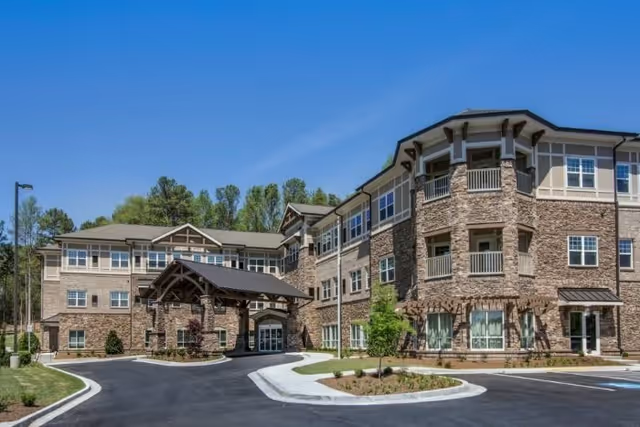
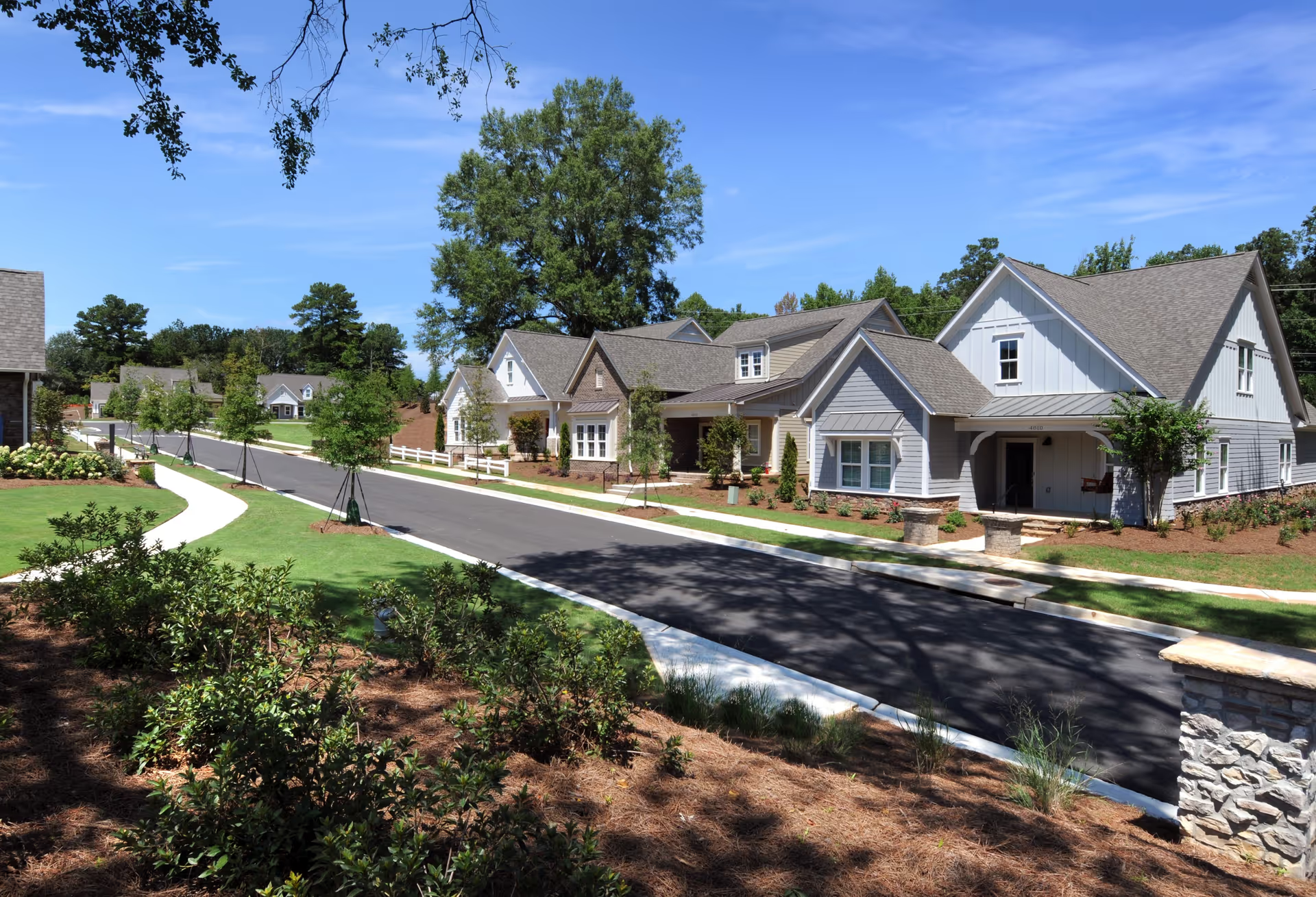
The Carriages of Marietta / Cadence Marietta elicits predominantly positive impressions for its facility, services, and social environment, while also showing consistent operational pain points that prospective families should evaluate. Many reviewers praise the compassion and personal engagement of caregiving staff, a welcoming, family-like atmosphere, and a wide range of on-site clinical and convenience services. The community’s physical attributes — single-level layout, attractive common spaces, natural light in apartments, outdoor seating, and well-kept grounds — are frequently noted as strengths that support resident wellbeing and mobility.
Care quality and staffing present a mixed but coherent picture. Numerous families highlight attentive, professional caregivers, visible clinical support (on-staff physician and nursing, rehab services), and staff who know residents by name. At the same time, there are recurrent concerns about staffing stability: high turnover, variable staff skill and compassion, and notably weaker coverage on some night shifts. These staffing inconsistencies translate into uneven responsiveness to call buttons and occasional delays in routine care tasks. The memory-care program is viewed positively where it is staffed and coordinated well, but several comments indicate gaps in dementia-specific training and capacity in other instances.
Dining and activities are frequent positives. The community offers a home-style dining room, varied menus, special events, and social programs such as happy hours, holiday dinners, outings, and games — elements that families say support social engagement. That said, observers also note variability in meal execution and preferences (including portioning and dessert frequency), and some reviewers describe limited activity availability when staffing is constrained. The recreation team and scheduled transportation are clear assets, but activity intensity may depend on resident mix and staffing levels.
Facility attributes and onsite services are strong selling points. Apartment sizes, built-in accessible features (walk-in showers, benches), salon and laundry services, library and fitness spaces, and accessible layouts receive positive comment. Safety systems such as panic buttons and secure entry are cited as reassuring, though there are occasional remarks about access-control practices that some families found inconsistent or overly restrictive. Maintenance tends to be well handled overall, with isolated notes about areas or units that need renovation and intermittent exterior lighting or parking-lot concerns.
Management, pricing, and communication show a pattern of strengths and friction. Several reviewers commend hands-on leadership, transparent improvements, and helpful admissions staff who facilitate move-in. Conversely, there are recurring concerns around billing transparency, unexpected fees or fee increases, and slow resolution of billing disputes. Communication lapses — delayed notifications about clinical incidents, mixed follow-up on family concerns, and inconsistent outreach from new leaders — are notable patterns. A small number of serious individual allegations (including post-occupancy billing disputes and conduct concerns) appear as outliers; these underscore the importance of checking contract terms, escalation pathways, and state complaint histories during tours.
Taken together, The Carriages of Marietta offers many attributes families commonly seek: engaged caregiving staff, robust on-site clinical and lifestyle services, accessible and attractive physical spaces, and active programming. Prospective residents and decision-makers should balance these positives against the documented operational risks: staffing variability (especially at night), housekeeping and laundry consistency, clarity of pricing and billing practices, and dementia-care staffing depth. Practical next steps for families would be to tour during multiple shifts, request current staffing ratios and turnover data, clarify which services are included versus extra, and speak with current residents or families about recent communication and incident-response experiences.