Overall impression: Reviews for Neville Center are highly mixed, with clear strengths in rehabilitative services and many reports of compassionate individual caregivers contrasted by recurring operational and quality-control concerns. Prospective residents and families will find evidence of strong therapy capability and supportive staff alongside repeated descriptions of inconsistent responsiveness, communication breakdowns, and sanitation and safety issues.
Care quality: The facility receives frequent praise for its physical, occupational and speech therapy teams; families describe individualized plans, longer therapy sessions in some cases, and measurable functional improvement that enabled discharge home. At the same time, reviewers describe variability in nursing and aide performance: while some nurses and CNAs are characterized as attentive and clinically skilled, others are described as unresponsive or rushed. Several reviews describe medication-administration gaps, delayed treatment responses, and inconsistent follow-up — operational weaknesses that have clinical implications. Safety practices were also raised as a concern, including transfer and bathroom-assistance processes, falls, wandering residents reaching other rooms, and use of bed/bed-exit alarms that some families find intrusive rather than person-centered.
Staff and culture: Staff competence and culture appear uneven. Many families singled out individual staff members (therapists, nurses, aides, and reception staff) for praise and noted acts of compassionate care and strong teamwork. However, a substantial number of reviews document problems with staff conduct and professionalism (including conduct on certain shifts), use of personal devices during work, long response times to calls for assistance, and limited availability of leadership at the bedside when issues arise. Staffing levels and shift-to-shift inconsistency are recurring themes linked to slower responses and gaps in routine care.
Dining and nutrition: Dining experiences vary considerably. Some residents and families report palatable meals and responsive dietary adjustments after dietitian involvement; others describe inconsistent meal delivery, missing meal components, cold food, and difficulty meeting specialized dietary needs such as diabetes or low-carbohydrate plans. Kitchen staffing, meal continuity (breaks/closures) and plate presentation are repeatedly cited as areas for improvement.
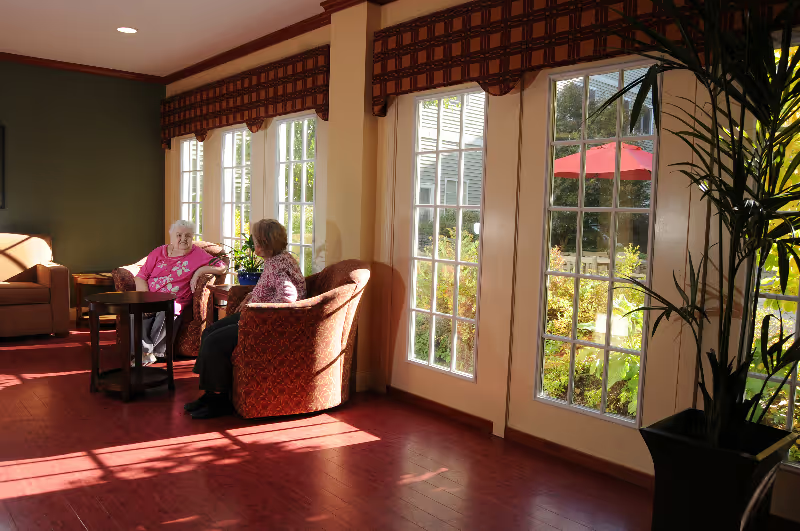
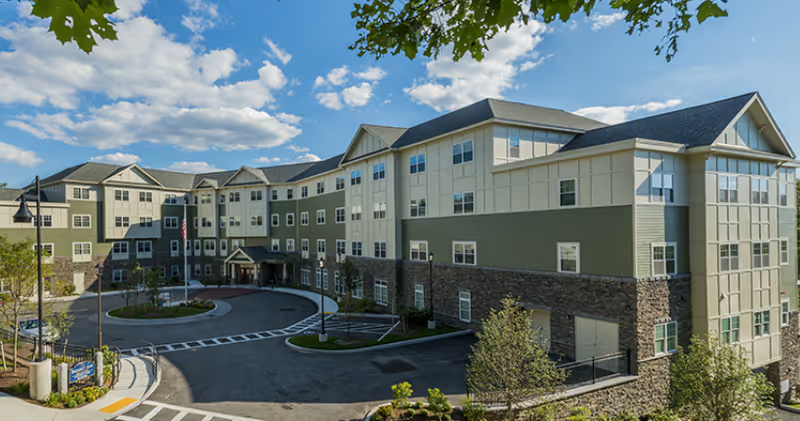
Facilities and environment: The physical plant is generally viewed positively: several reviewers described bright, attractive spaces, pleasant outdoor seating, a green-view therapy room, and rooms with natural light and pond-facing windows. Conversely, there are multiple accounts of sanitation and temperature-control concerns, intermittent cleanliness problems in rooms and common areas, pest-control issues in some units, and maintenance lapses (broken TVs, remotes, heating/cooling irregularities). These inconsistencies contribute to widely divergent experiences across residents.
Management and operations: Reviews indicate inconsistent communication and operational coordination. Families report instances of unexplained room moves, delays in medical records and callbacks, limited or delayed incident notification, and occasional difficulty getting managerial assistance. There are also a few serious individual allegations — including missing personal items and infection/outbreak events — that prompted internal investigations or regulatory attention in some instances. While some administrators and staff have been praised for follow-up and problem resolution, patterned gaps in communication and process control are evident.
Notable patterns and guidance for families: The strongest, most consistent positive is the rehabilitation program and several standout clinicians; the most consistent negatives are variability in daily care responsiveness, meal reliability, sanitation practices, and staff professionalism across shifts. Families considering Neville Center should ask specific, operational questions before admission: average call-button response times, staffing ratios by shift, infection-control and pest-control records, how the facility documents and enforces medication-administration protocols, examples of individualized therapy plans and session durations, and the process for communicating incidents and room changes to families. Requesting PT/OT logs, recent infection-control reports, the dining services’ approach to therapeutic diets, and contact information for the on-duty nurse or supervisor can help set expectations and provide accountability during a stay.