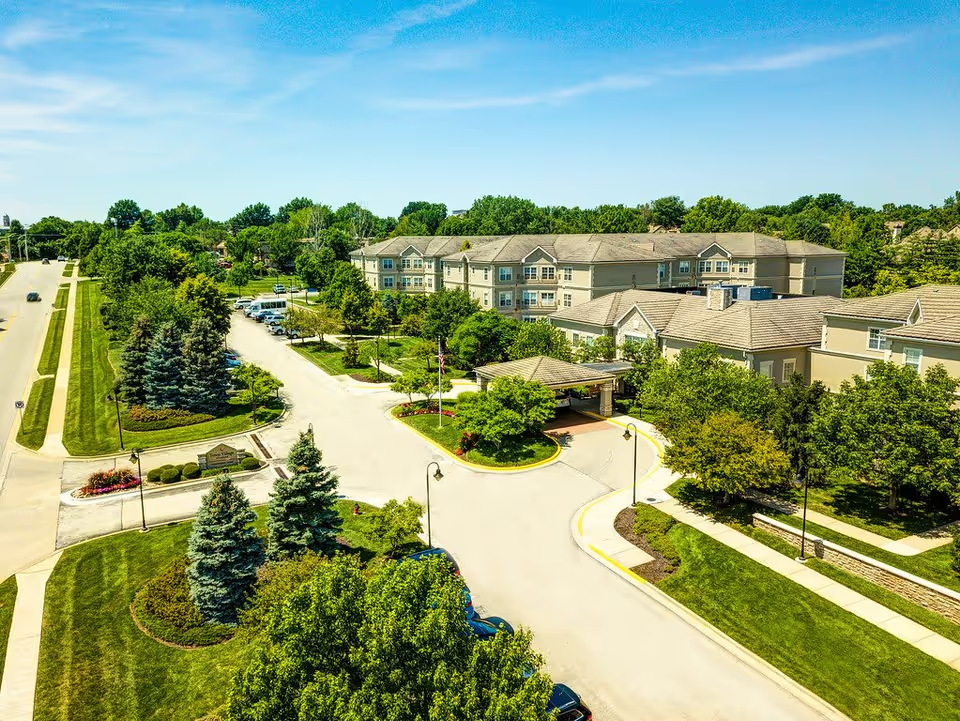
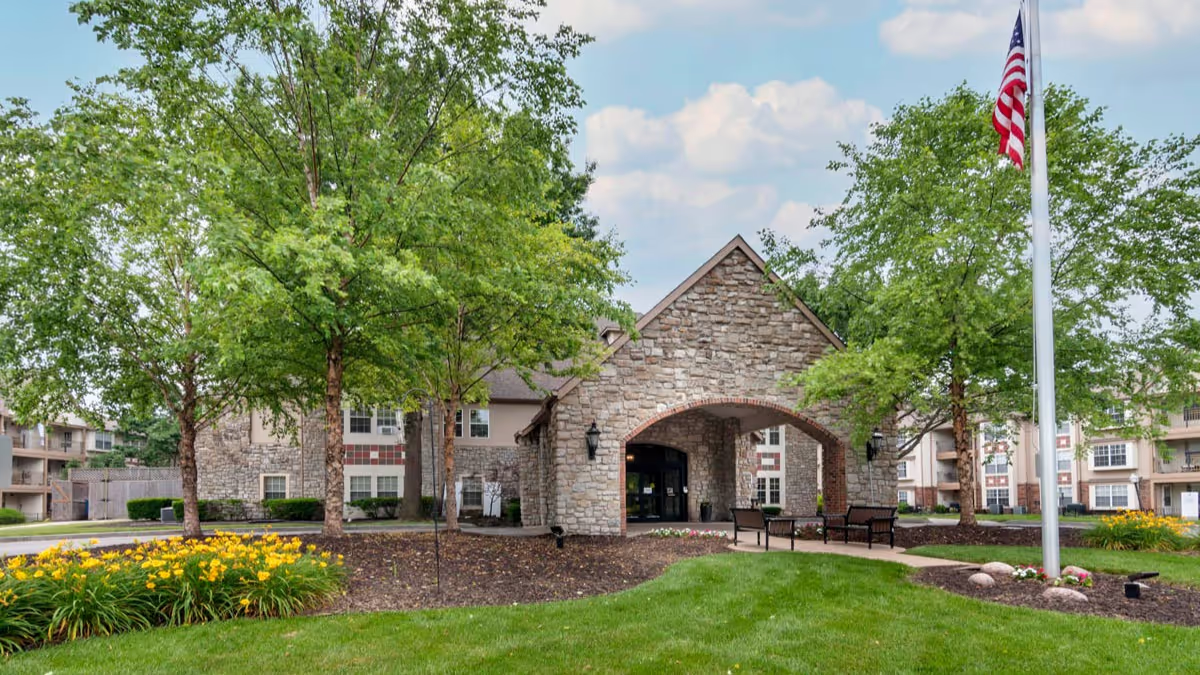
The collected accounts present a polarized picture of Timberlakecare Center, with clear strengths in rehabilitation, activities, and some areas of administration, alongside recurring operational and clinical concerns. Many families and visitors cite compassionate direct-care staff, an engaged therapy department, and a broad activity schedule that contributes positively to residents' quality of life. Several comments also praise dining on particular meals and note efficient business-office operations, pleasant common areas with natural light and small amenities (aquarium, indoor bird cage, chapel), and recent management-led upgrades to the physical plant.
Care-quality observations vary considerably. Positive accounts describe attentive nursing and aides who nursed residents back to improved function and worked closely with therapy. Conversely, other accounts describe delays in attending to resident needs, missed or late medications and treatments, and concerns about pressure-ulcer prevention and incontinence-care responsiveness. These contrasting reports suggest inconsistent clinical practice and reliability across shifts or units rather than uniformly high or low performance.
Staffing and staff conduct are similarly mixed. Several reviews commend compassionate, professional employees and highlight helpful social-services and therapy teams; other comments point to staffing instability, frequent use of agency personnel, and instances of underqualified or disengaged workers. There are also recurring concerns about the tone of communication and responsiveness from some staff members, which has affected family satisfaction and perceived resident well‑being.
Dining and therapeutic-diet management show variability. Many residents and families enjoy varied menu options and specific meals that are well prepared, while others report low-quality meals, substitutions, or breakdowns in adherence to special diets (for example, diabetic or dialysis-appropriate meals). Meal delivery timing and tray service consistency are additional operational areas that reviewers flagged as uneven.
Facility condition and infection‑prevention practices show divergent impressions. Several reviewers describe clean, well-kept public spaces and private rooms, but others describe sanitation shortfalls, pest-control concerns in some areas, and deferred maintenance such as HVAC failures, window and ceiling leaks, and inconsistent availability of infection-prevention supplies. These infrastructure and environmental issues can exacerbate clinical risks and family concerns when they occur.
Management and communication present both improvement signals and procedural weaknesses. Some families note a proactive administrator, refurbishment efforts, and professional handling of complaints; others describe delays in grievance resolution, poor family communication, restrictive visitation or movement policies in certain situations, and at least one serious concern raised following a resident's death. There are also comments about inconsistent physician follow-up and gaps in clinical oversight that compound staff- and process-related problems.
Overall, Timberlakecare Center appears to offer solid rehabilitation services, an active programming slate, and several individualized strengths in staff and amenities, but the facility also shows patterns of inconsistent operational execution: variable housekeeping and maintenance, unreliable medication- and treatment-delivery practices, staffing variability, and uneven management–family communication. Prospective residents and families should weigh the facility’s rehabilitation and activity strengths against these operational risks, and consider direct conversations with management about staffing stability, medication and wound‑care protocols, infection‑prevention supplies, therapeutic-diet procedures, and grievance/communication processes before placement.