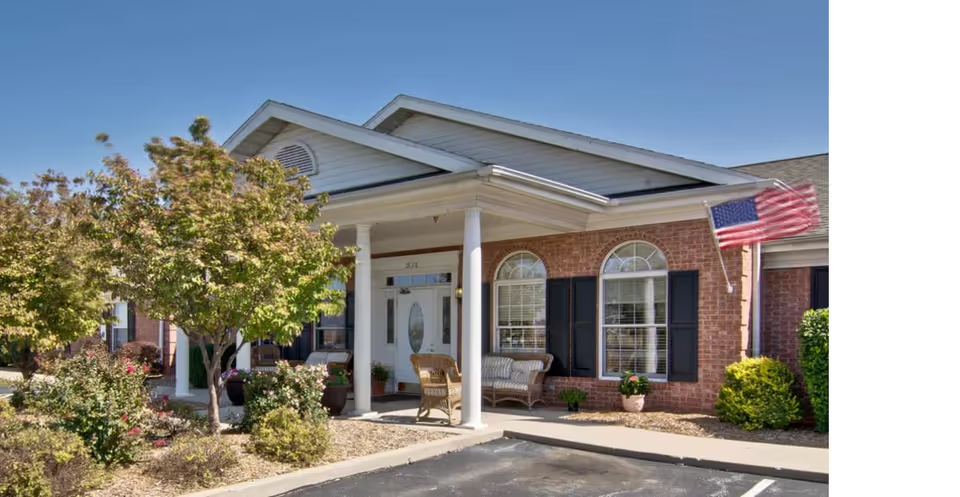
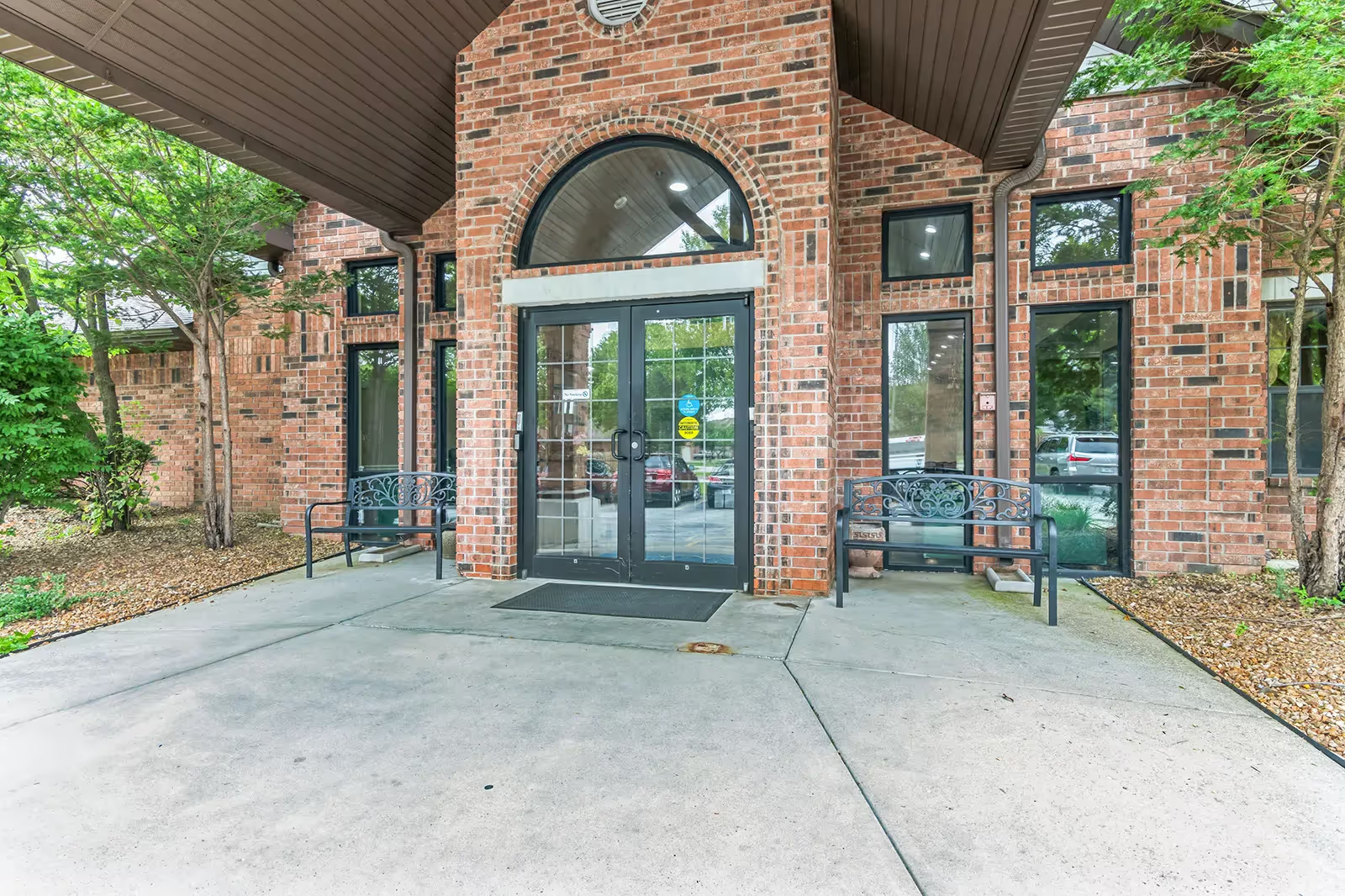
The reviews present a highly polarized picture of Springfield Skilled Care Center. Several families and former residents describe meaningful positive experiences: direct-care staff who are attentive and compassionate, activity and therapy programs that support mobility and engagement, and visible improvements since recent leadership changes. Multiple comments single out individual caregivers and CNAs for strong, dependable work, and some reviewers describe clean, well-maintained areas and effective rehabilitation services for residents with complex needs.
Care quality appears inconsistent. Reviewers describe timely assistance and proper medication administration in some cases, while other accounts raise concerns about medication-management processes, delayed clinical evaluations, and occasional gaps in medication availability. Emergency and acute-care responses were described as variable; some families reported prompt intervention, whereas others described delays in assessment and escalation. The pattern suggests uneven clinical competency tied to staffing and training variability rather than a uniformly applied standard of care.
Staffing and workforce issues are prominent themes. Many comments point to chronic staffing shortages, high turnover, low wages, frequent call-ins, and a limited clinical skill mix on some shifts. These factors are described as driving rushed care, inconsistent attention to resident needs, and supply constraints for frontline workers. Reviewers also described uneven communication and phone responsiveness from the facility, making it difficult for families to obtain timely updates or to escalate concerns.
Operational and environmental concerns recur across reviews. Cleanliness and linen-supply inconsistencies, occasional odor concerns, slow maintenance turnaround, and equipment failures were reported. Some units were praised for monthly pest-control measures and recent cosmetic upgrades, but other accounts describe pest-control concerns and bed-bug-related reports. Dining quality was described as inconsistent, with specific mentions of limited fresh produce and food that did not meet dietary expectations for some residents.
Safety, security, and administrative process shortcomings are likewise highlighted. Reviewers report unsecured doors or informal entry, missing personal items, and weak property-protection practices. Multiple accounts describe dissatisfaction with how incidents and complaints were handled, including insufficient follow-up and poor visibility of administration; at the same time, several reviewers noted that new administrators have undertaken improvements and greater responsiveness. There are also serious, specific claims—characterized by reviewers as theft, medication mishandling, and at least one law-enforcement-involved incident—that warrant verification through regulatory records and facility investigation.
In sum, prospective residents and families will find evidence of both committed frontline staff and significant operational weaknesses. Strengths include compassionate caregivers, activity/therapy options, and recent leadership-driven improvements. Risks include inconsistent staffing and training, medication-management vulnerabilities, communication and complaint-handling gaps, environmental and maintenance shortfalls, and security/property-protection concerns. Before admission, families should review the facility’s current staffing ratios and training programs, request recent state inspection and corrective-action records, verify medication-safety protocols, inspect common and resident areas in person (including pest-control documentation), and ask about complaint-resolution procedures and security measures. These steps can help assess whether the facility’s recent improvements have addressed the operational risks described in the reviews.