The reviews for River Crossing Rehab and Healthcare Center present a mixed picture with clear strengths alongside recurring operational concerns. Many family members and residents praise the hands-on caregivers, therapy team, and activity staff; these elements are frequently described as compassionate, motivated, and effective in improving residents' function and quality of life. Several reviewers specifically commend the rehabilitation services, the variety of activities and outings, an active resident council, and a dining area that is often described as clean and well-maintained. Maintenance responsiveness and an admissions team that facilitates transitions are also consistently noted as positives.
Care quality appears to be uneven. A number of accounts describe attentive, professional nursing assistants and nurses who provide good day-to-day care and meaningful engagement, while other accounts point to variability across shifts and individual caregivers. Operational patterns inferred from the reviews include delayed assistance for basic needs, inconsistent bathing and toileting support, and instances of delayed medication administration — including pain medications — which families cite as a serious concern. These descriptions suggest gaps in staffing levels, shift coverage, and medication-management processes that can affect clinical continuity.
Staffing and staff conduct are central themes. Positive narratives emphasize kind, thoughtful staff who create a family-like atmosphere; negative narratives focus on understaffing, staff appearing overworked, and variability in professionalism (for example, inattentive behavior, use of personal devices while on duty, and staff dining at care stations). Leadership impressions are similarly mixed: some reviewers praise an engaged, hands-on administrator and named staff who resolve issues promptly, while others describe recent management changes, poor communication from administration, and difficulty reaching leadership when concerns arise.
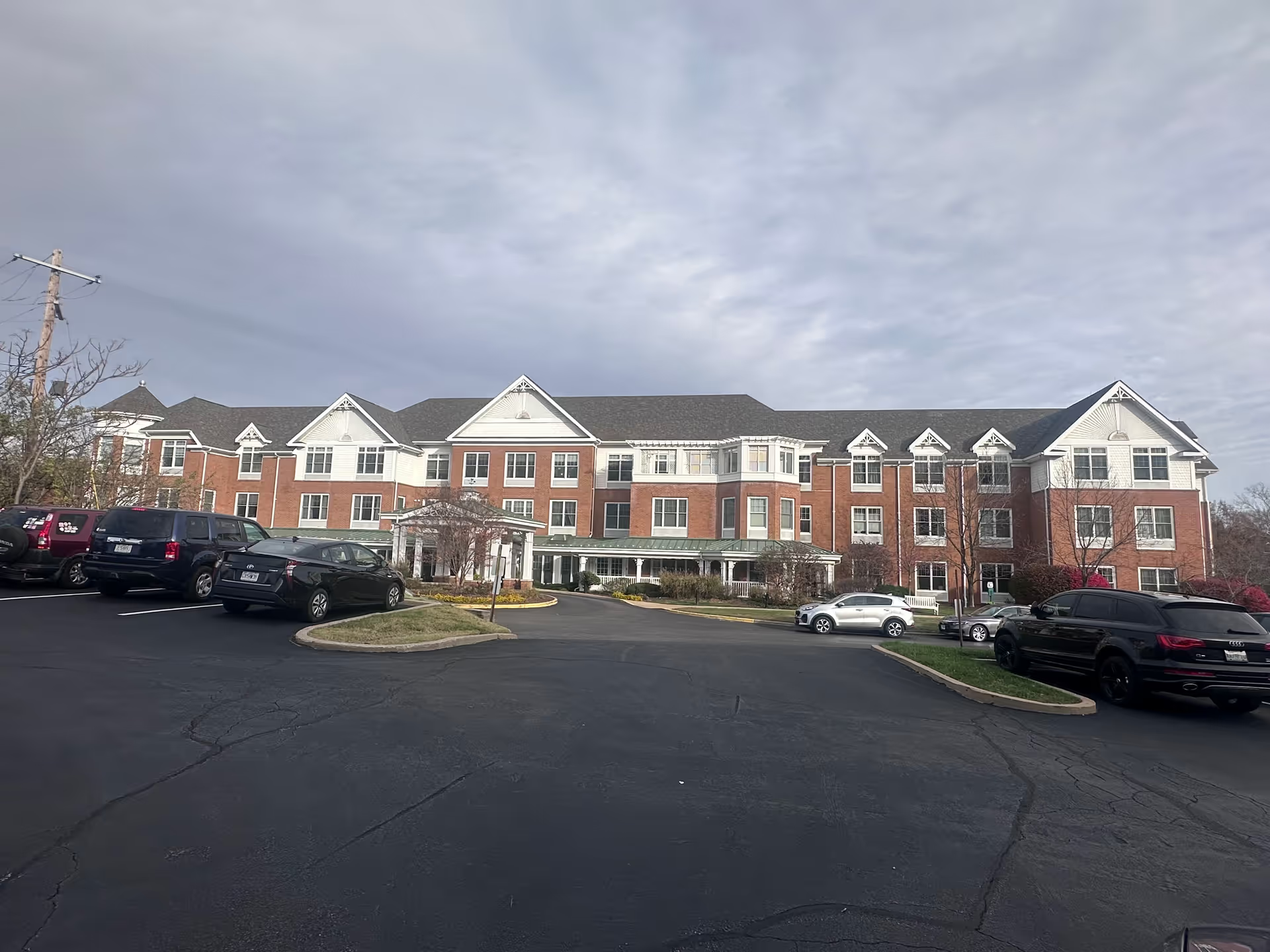
The physical plant and amenities show contrasts as well. Portions of the facility and common spaces are described as clean and well-maintained, but multiple reviewers identify an aging building, dated furniture, minimal amenity offerings (such as lack of TVs in rooms), peeling paint, and outdoor areas with litter and cigarette debris. There are reports of completed renovations in some areas, indicating partial capital improvements, but overall the facility is characterized as needing broader updates.
Dining and activities receive largely favorable remarks for fresh-prepared meals, availability of snacks/fruit, and a robust activities calendar; however, there are also accounts of inconsistent food quality and serving delays. Family communication and property handling show variability: some families report responsive resolution of issues, while others report lost personal items and concerns about inventory controls.
Notable patterns that prospective residents and families should consider include the variability of care by shift and by individual caregiver, recurring staffing shortages that affect response times, and medication-administration and clinical-response concerns. There are also isolated but serious allegations requiring further verification, including claims of criminal conduct; such items warrant review of state inspection records and follow-up with facility leadership. For decision-making, families may find it useful to ask the facility about current staffing ratios, medication-safety protocols, recent renovation plans, infection-control policies, and how the facility addresses and documents incident follow-up and family communication.