Overall sentiment: The reviews present a uniformly positive impression of The Grand Victorian Rose. The recurring themes across the summaries are warmth, comfort, and a strong home-like identity anchored in Victorian-era charm combined with contemporary conveniences. Reviewers repeatedly describe the place as beautiful and very homey, and several explicitly state they would recommend it. The tone indicates high resident and family satisfaction with the setting and general living experience.
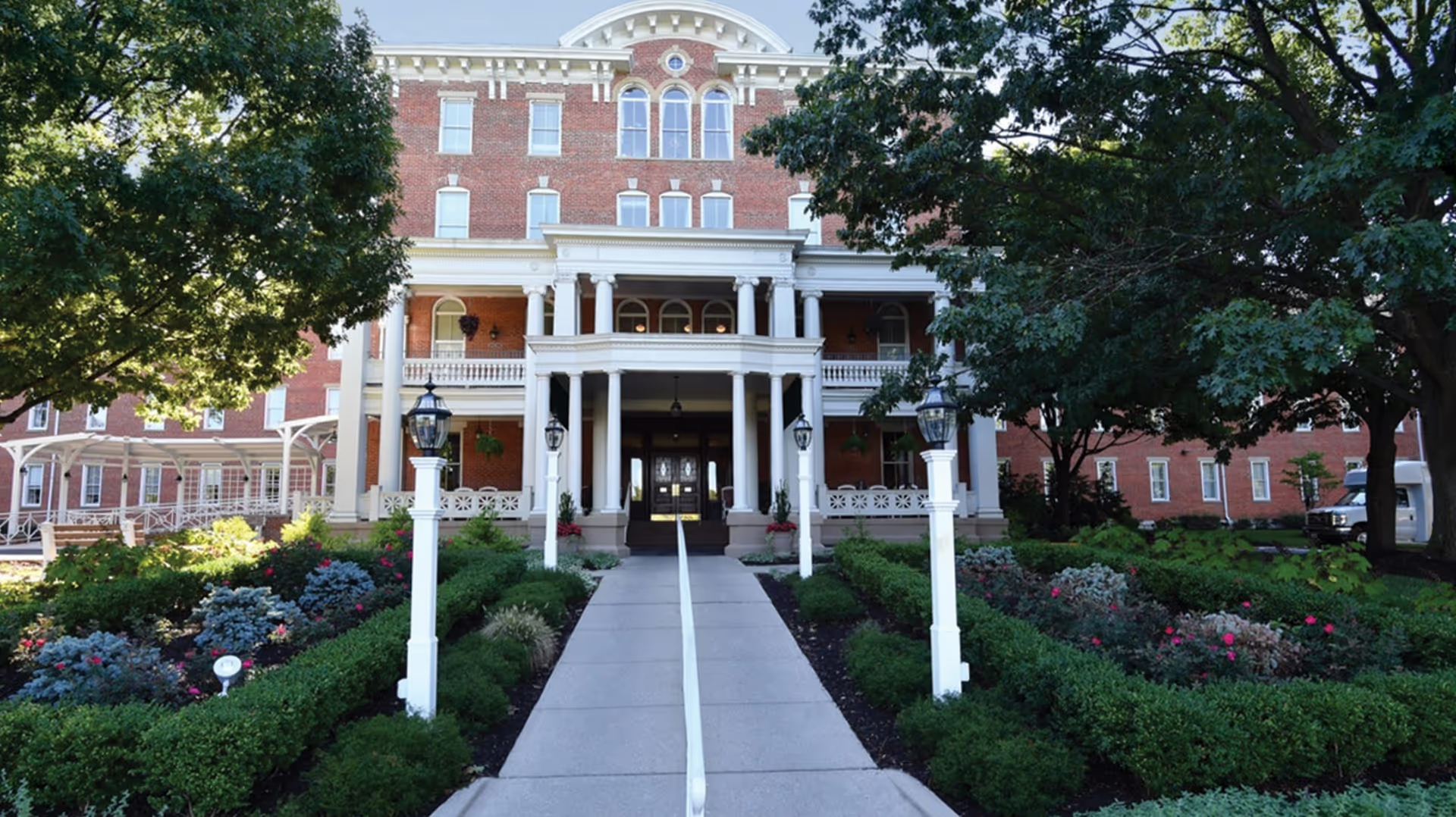
Facilities and atmosphere: The facility is characterized as a small, residential, old house with prominent Victorian atmosphere. Multiple reviews highlight the 20th-century charm while noting that the facility also offers 21st-century amenities — suggesting a blend of historic character and modern functionality. Physical features emphasized include large living areas and multiple spaces suitable for quiet activities like sitting and reading. The small scale and home-like design are presented as core strengths, creating a comfortable, intimate environment that appeals particularly to older adults and evokes the feel of a familiar neighborhood or ‘‘mom's old neighborhood.’'
Care, staffing, and resident experience: While direct comments about individual staff members or specific caregiving actions are not present in the summaries, reviewers explicitly note a low resident-to-caregiver ratio and an environment where residents feel pride in calling the place home. Those two points together imply a setting conducive to personalized attention and close relationships between staff and residents. The frequent use of words such as ‘‘home’', ‘‘homey’', and ‘‘pride in calling it home’’ indicates strong emotional and subjective satisfaction among residents or their family members.
Services, activities, and gaps in the reviews: The provided summaries do not mention specific services such as dining quality, medical or nursing care, scheduled activities, transportation, therapy services, pricing, or administrative/management performance. Because those topics are absent, reviewers’ praise is concentrated on ambience, scale, and the general living environment rather than on programmatic or clinical details. This absence is notable: prospective families should regard the strongly positive impressions about atmosphere and staffing as well supported, but should also seek additional, targeted information about dining, medical oversight, daily activity offerings, and other operational aspects that are not covered in these summaries.
Patterns and implications: The dominant pattern is that The Grand Victorian Rose is perceived as a small, attractive, comfortable residential option that suits older adults who value a homelike, nostalgic setting backed by adequate modern amenities. The low resident-to-caregiver ratio and repeated expressions of pride in the residence point toward highly personalized care and a family-like culture. However, because reviews focus on feel and ambiance rather than objective measures of clinical care or program breadth, interested parties should confirm specifics about health services, staff training, and recreational programming to ensure the facility meets all clinical and lifestyle needs.
Bottom line recommendation: Based on these summaries, The Grand Victorian Rose appears to excel at creating a warm, comfortable, and aesthetically pleasing home environment with a small-community atmosphere and likely personalized attention due to a low staff-to-resident ratio. It is well suited to older adults and families who prioritize a home-like setting and Victorian charm. To complete the evaluation, prospective residents and families should ask the community for more detailed information about clinical care levels, dining, daily activities, and other operational details not covered in the provided reviews.