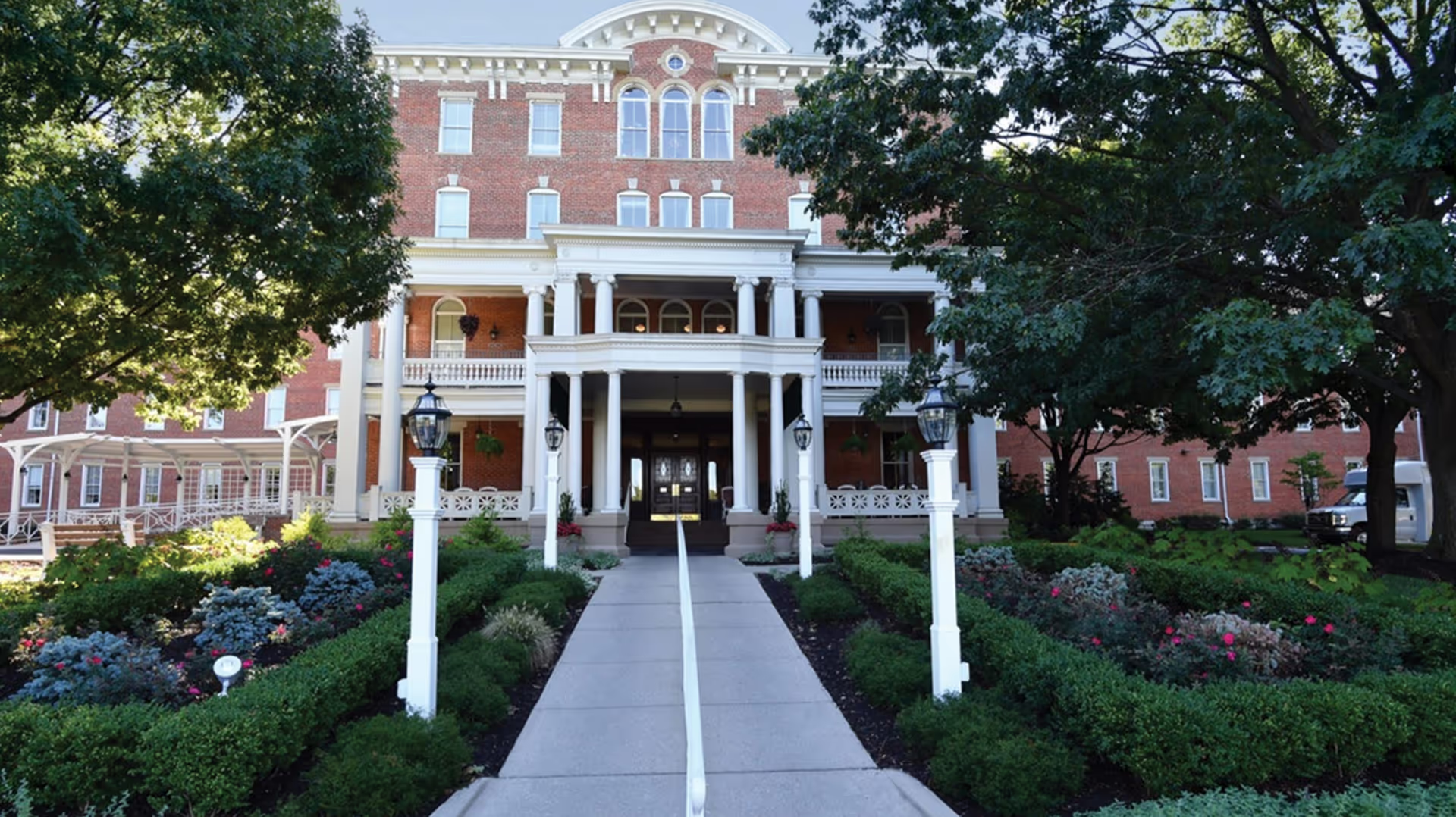
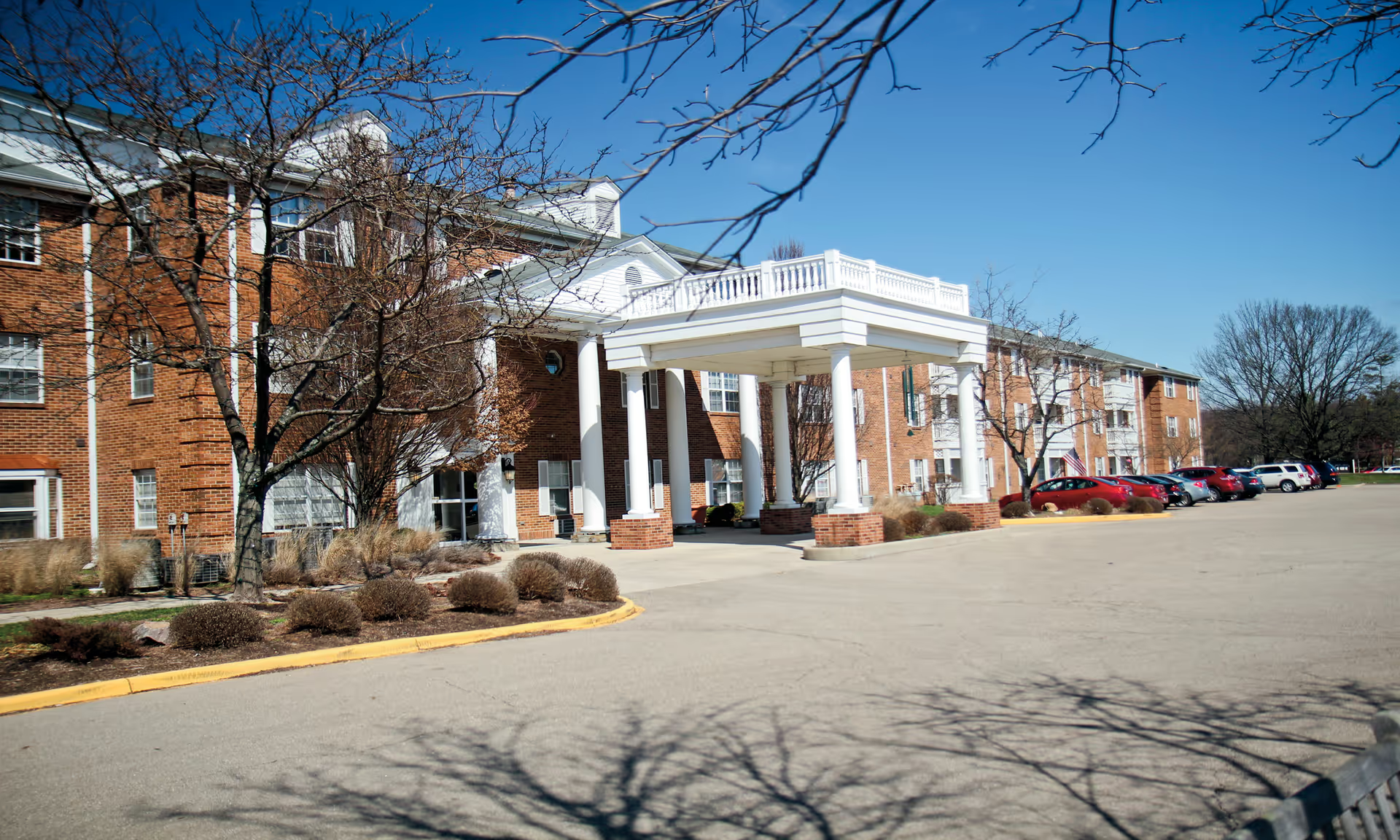
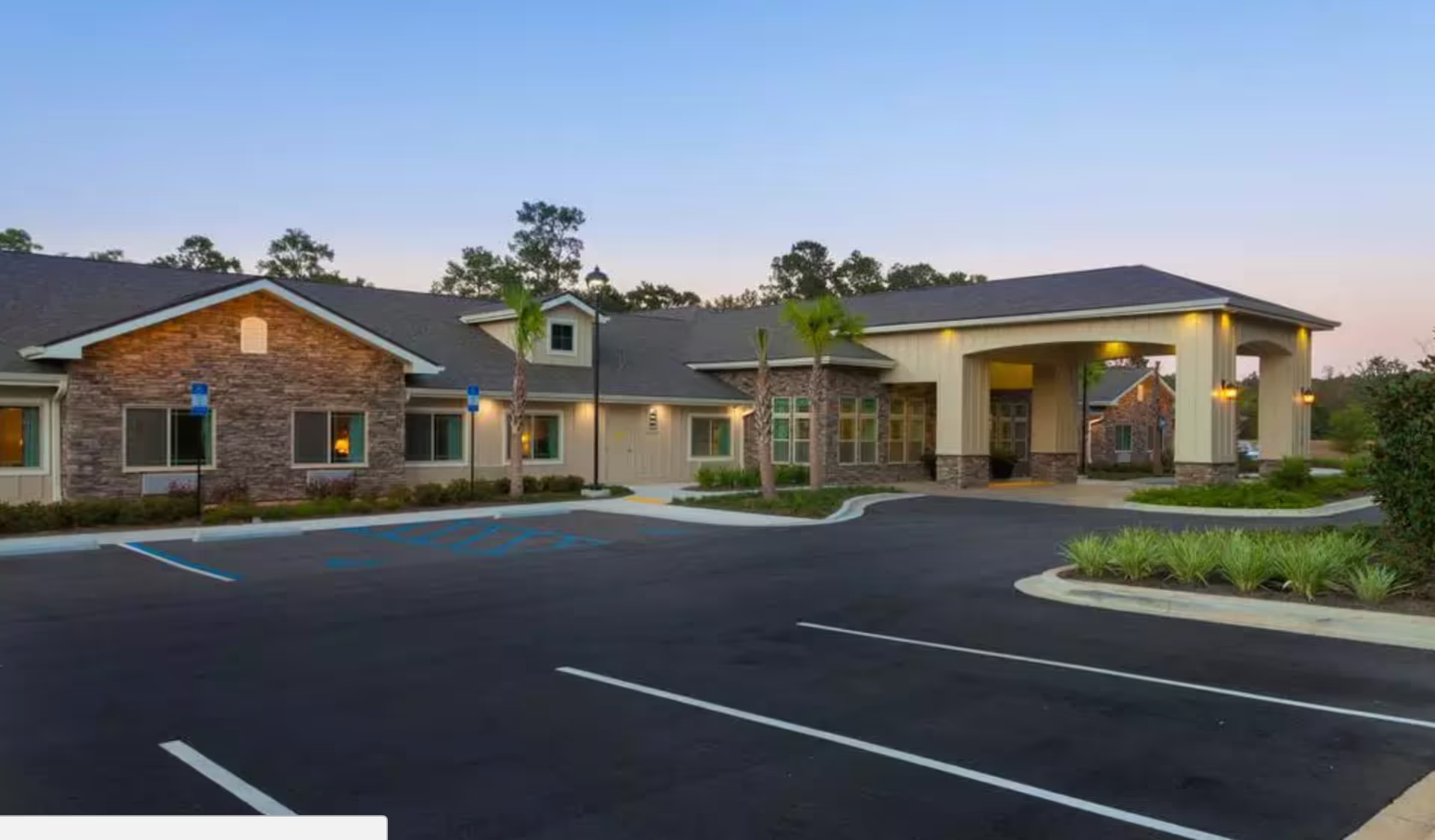
Laurels of Kettering elicits strongly polarized impressions. Many families describe a clean, attractive campus with friendly front‑desk staff, a capable therapy team, and individual caregivers who deliver compassionate, family‑oriented support. Multiple accounts highlight effective physical and occupational therapy leading to functional gains, well‑prepared dining options, private rehab suites and smooth admissions, and a business office staff that assists with Medicare/Medicaid navigation. Several reviewers specifically praised hospice collaboration and end‑of‑life comfort provided by individual clinicians.
At the same time, a substantive set of concerns appears repeatedly and centers on operational consistency. Staffing levels and workload assignments are cited as uneven; reviewers describe slow responses to call lights and delays in attending to resident needs. Medication administration timing and coordination — including missed or late doses and delays in ordering medications — emerged as a recurring issue. Related clinical concerns include inconsistent bathing and incontinence‑care schedules, pressure‑injury care lapses, and delayed clinician response for acute issues. Safety practices around transfers and fall prevention were also flagged as areas needing attention.
Service reliability and communication show a mixed picture. While many families report compassionate, helpful caregivers (with several staff members named positively), others describe inconsistent staff conduct and lapses in professional communication tone. Therapy is frequently a strength, but there are reports of discrepancy between planned therapy hours and what was delivered. Dining receives both praise for selection and criticism for prolonged service delays, cold or incorrect meals, and occasional failures to respect dietary restrictions. Housekeeping and maintenance are generally noted as strengths for the public spaces, but sanitation concerns and housekeeping lapses are described in some resident rooms and dining areas. Laundry handling and personal‑property management have been identified as additional operational gaps.
Management and administration evoke both appreciation and frustration. The business office and specific administrative staff are routinely commended for responsiveness and assistance, yet several reviewers describe front‑office nonresponsiveness, billing or insurance inconsistencies, and unmet promises regarding care plans and discharge timing. Infection‑control and quarantine enforcement were raised as concerns in a subset of accounts. Taken together, the pattern suggests variability across shifts and units: some teams and time periods provide high‑quality, attentive care, while others struggle with staffing, timeliness, and consistency.
For prospective residents and families: on‑site observations and targeted questions are advisable. Consider assessing staffing levels on the intended unit/shift, timing of medication administration and call‑light response, how therapy minutes are scheduled and documented, dining service during a mealtime visit, laundry and personal‑property procedures, and escalation/communication pathways with administration. Asking for recent staffing ratios, therapy plans with measurable goals, and examples of infection‑control protocols may help clarify whether the facility’s strengths align with your care priorities. Overall, Laurels of Kettering offers clear strengths in rehabilitation, select caregiving teams, and campus amenities, alongside operational inconsistencies that merit careful evaluation during the decision process.