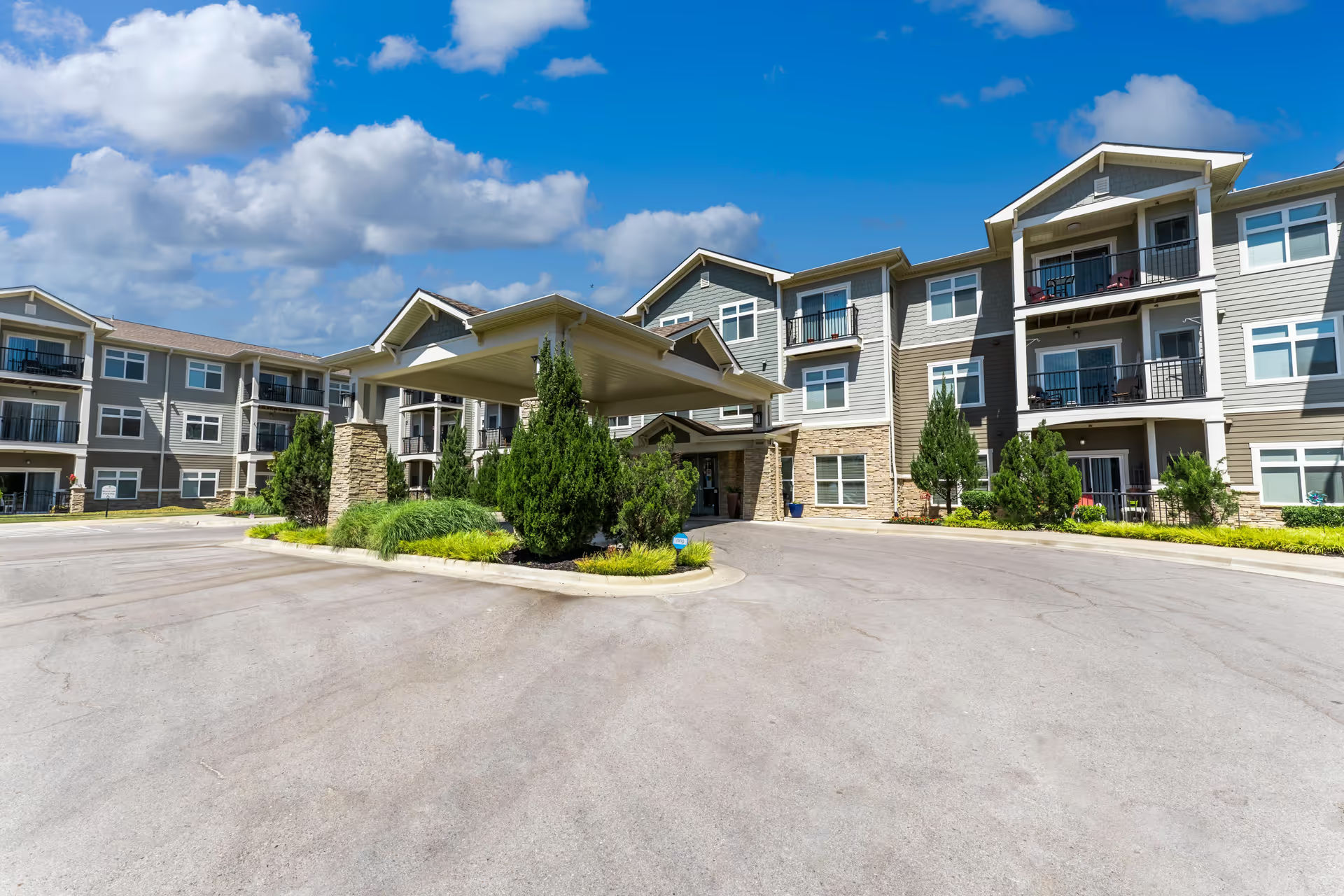
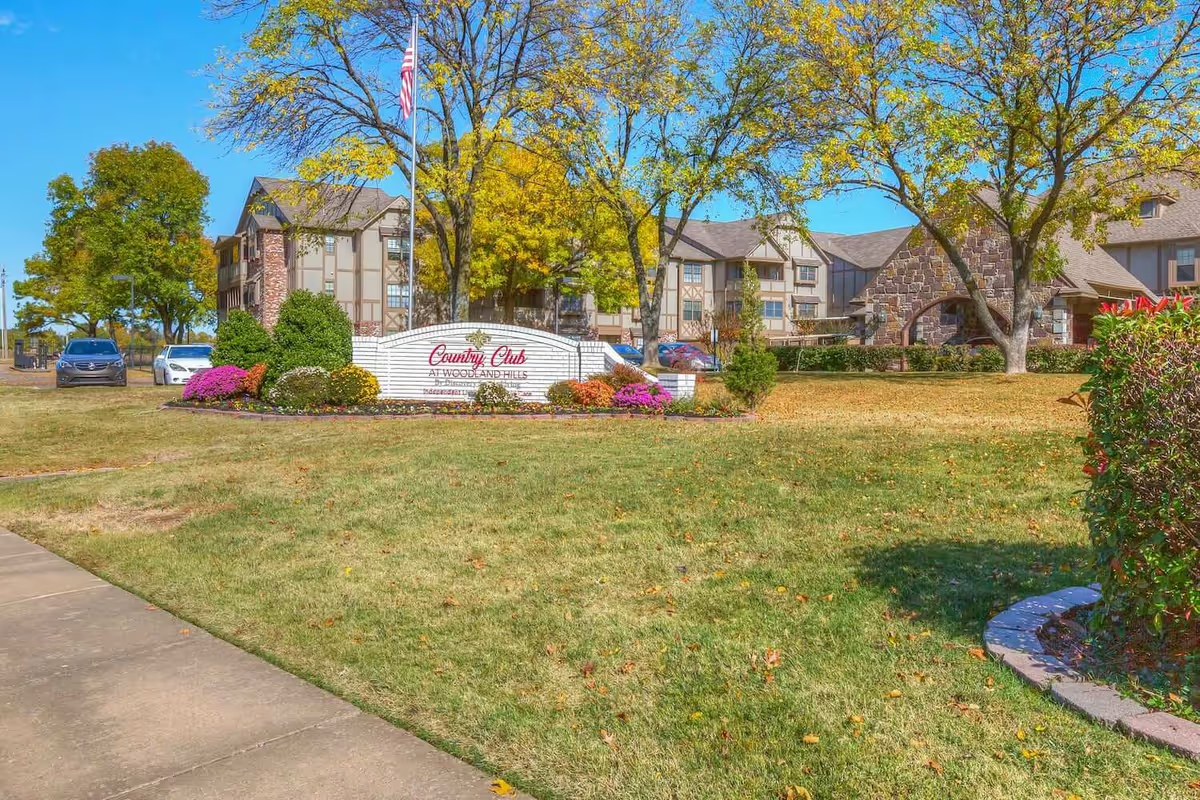
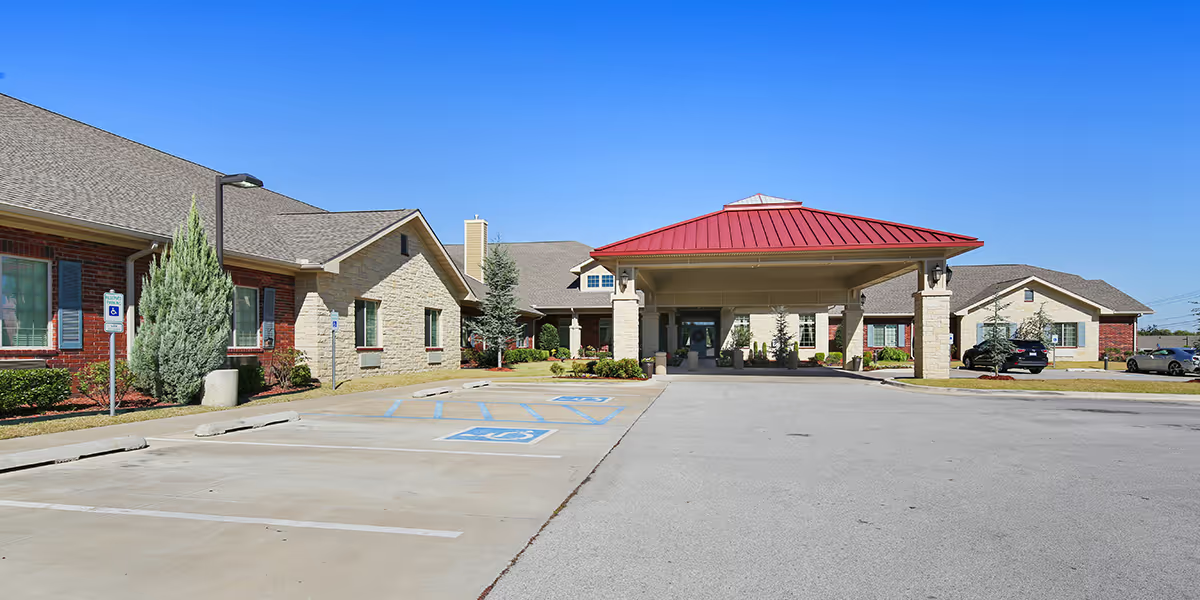
Reviews of Baptist Village of Broken Arrow describe a facility with clear strengths and recurring operational weaknesses, producing a strongly mixed overall impression. Positives frequently cited include a small-household neighborhood design, which many families find home-like and supportive of social engagement. The campus offers an adjacent communal dining room, on-site nursing presence in neighborhoods, and a dedicated memory-care program that emphasizes one-on-one attention. Families report robust activities—regular crafts, games, therapy dogs, and religious programming—and overall good food that is both varied and reasonably priced. Many reviewers praised individual caregivers as compassionate, patient, and attentive, and some families specifically noted strong support around transitions and end-of-life events.
At the same time, a pattern of operational concerns appears repeatedly. Several reviews describe inconsistent staff conduct and professionalism, along with gaps in communication between staff and families. Related issues include medication-management and documentation weaknesses and staffing shortages or scheduling instability that appear to affect care continuity. Sanitation and odor-control problems, maintenance delays (including plumbing and air-quality complaints), and pest-control concerns were raised in a number of accounts, creating uneven experiences across rooms and neighborhoods. These facility-level weaknesses contribute to variability in perceived care quality: while some families report excellent, reassuring care, others describe episodes of delayed attention and unsatisfactory follow-up.
Management and leadership were another recurring theme. Positive accounts mention supportive administrative contacts who assisted with transitions and family communication; negative accounts raise concerns about management–staff relations, responsiveness to complaints, and staff morale. This variability suggests that resident experience can be highly dependent on which neighborhood, shift, or staff members are involved. Financial considerations were also noted: a few families expressed concern about cost relative to their assessment of service reliability and timely notice in administrative actions.
For prospective residents and families, the facility’s strengths—neighborhood model, memory-care focus, active programming, on-site nursing, and generally positive dining—are important assets. When evaluating Baptist Village of Broken Arrow, visitors should tour the specific neighborhood under consideration, observe staffing levels during different shifts, attend a meal and an activity, review medication-administration and communication protocols, and ask about maintenance and pest-control schedules. Asking for recent examples of how management responded to family concerns and for references from current families in the target neighborhood can help gauge whether the experience will align with the positive or negative patterns reflected in reviews.