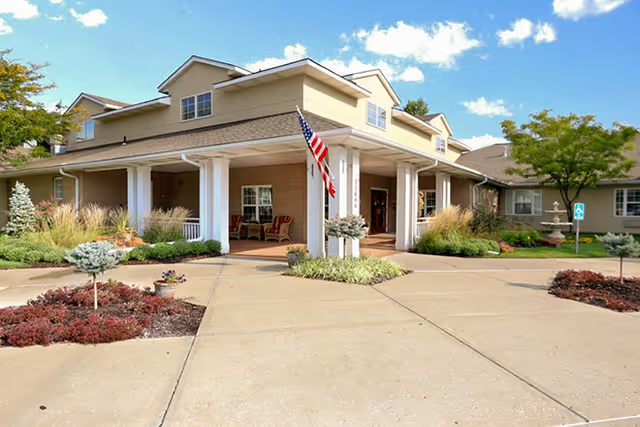
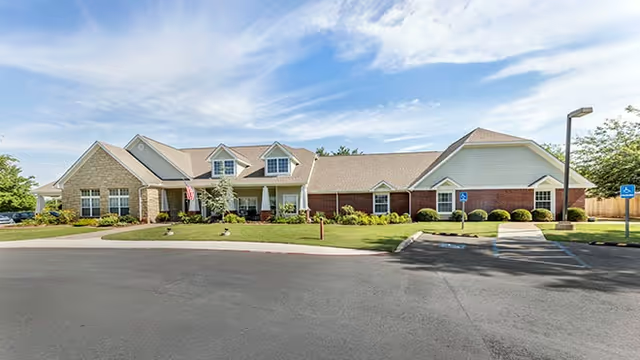
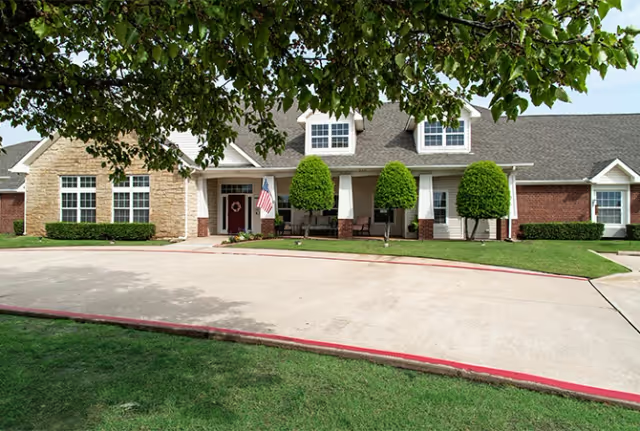
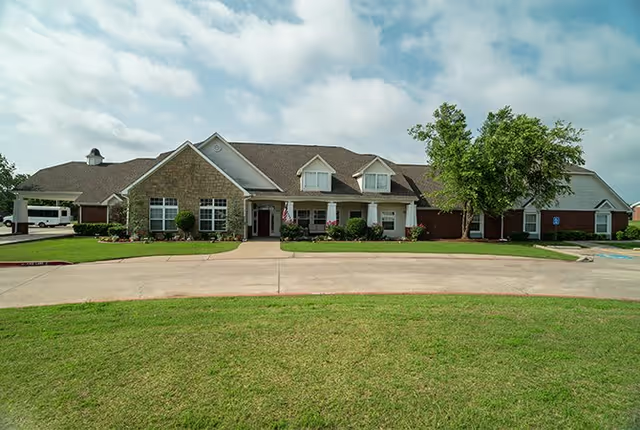
Avonlea Cottage of Seminole presents as a small, home-like assisted living community with several evident strengths. Many reviews emphasize a clean, well-maintained interior and tidy resident rooms, as well as a sanitary kitchen. The facility is described as intimate and welcoming, with a residential scale that some families find conducive to individualized attention and a supportive environment for independence. Its proximity to medical services and routine physician/professional visits are additional practical advantages for residents with ongoing care needs.
Care and staffing are frequently highlighted as positive features: reviewers praise courteous, compassionate caregivers, one-on-one attention, and on-site licensed/certified staff including CMAs and full-time nursing presence. Several families described responsive staff availability, including 24/7 coverage and assistance with outings or medical appointments. At the same time, there are recurring concerns about inconsistent staffing levels; some accounts indicate that staffing variability has contributed to delays or gaps in service delivery, and there are specific mentions of medication management concerns. Prospective residents should ask about current staffing ratios, medication-administration protocols, and how the facility handles off-shift clinical needs.
Dining and activities receive mixed feedback. Positive comments note engaging programs such as crafts, games, daily exercise, and live entertainment from local church groups, along with on-site hairdressing services. Other reviewers raise issues with inconsistent meal quality and limited activity variety (with an emphasis on bingo in some descriptions). Families may want to review sample menus, observe a mealtime during a visit, and request an activity calendar to assess whether the offerings match the resident’s preferences.
Facility layout and location are double-edged. The building is described as well-kept and tidy, and its walkable location to emergency and doctor services is convenient. Conversely, the site is adjacent to a highway, producing noticeable traffic noise, and interior spaces are described as somewhat cramped for wheelchair users or larger mobility devices. Those with mobility needs should tour accessible routes, door widths, and bathroom configurations to confirm compatibility with required equipment.
Management and safety considerations require careful attention. Some reviewers praise the administration as trustworthy and respectful, while others cite management communication and coordination gaps that affect transportation, appointments, and day-to-day oversight. There is also mention of inadequate personal-property security controls, with at least one allegation of missing items; this suggests families should clarify the facility’s policies on storage, labeling, and incident investigation. Given the mixed input, an in-person walkthrough is strongly recommended: ask direct questions about medication protocols, staffing contingency plans, transportation logistics, activity scheduling, grooming and ADL assistance practices, and measures for safeguarding residents’ belongings.
Overall, Avonlea Cottage offers a small, personable setting with several operational strengths in cleanliness, individualized care, and community-focused activities, but there are recurring operational concerns that prospective residents and families should investigate further during a visit. Key areas to probe are staffing consistency, medication management procedures, dining reliability, property-security practices, and accessibility for mobility devices.