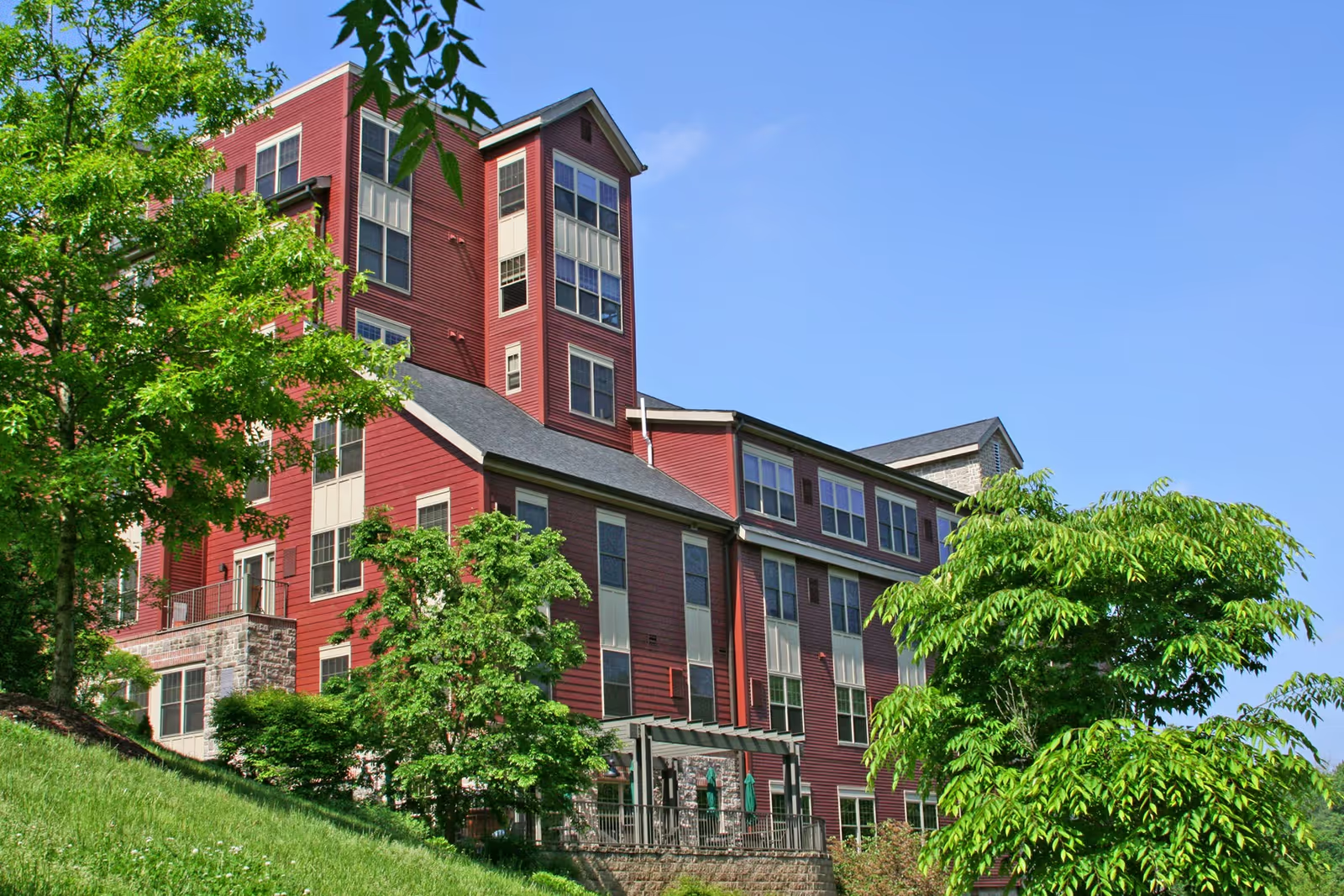
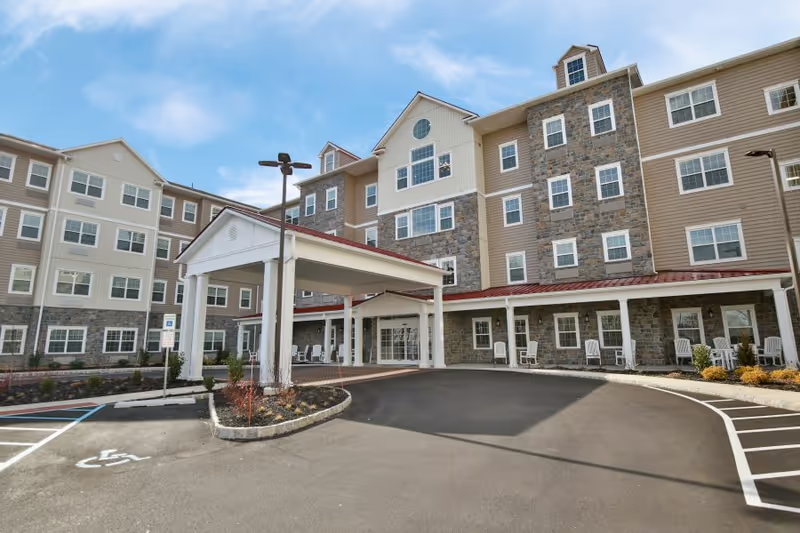
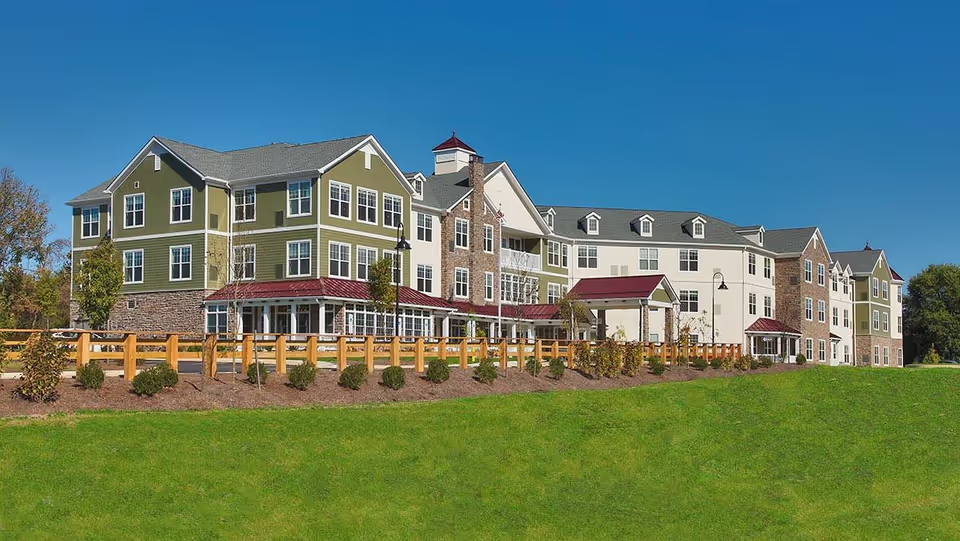
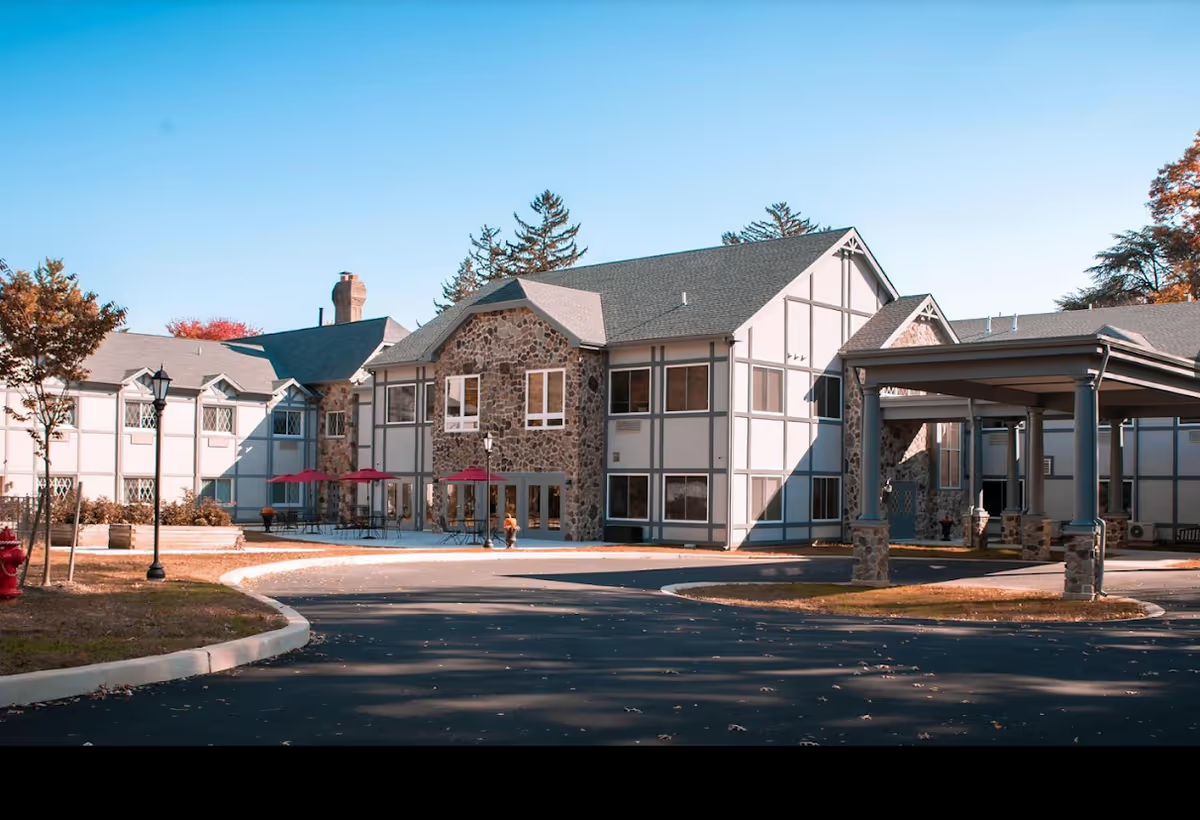
Wallingford Skilled Nursing and Rehabilitation Center elicits a strongly mixed set of impressions. Many accounts praise the facility’s therapy services and the direct-care staff: physical and occupational therapy are frequently described as skilled and effective, with several families singling out therapists and therapy leadership for producing good rehabilitation outcomes. Nursing staff and certain aides are routinely described as compassionate and attentive, and social-work and discharge-planning staff have been credited with helpful coordination in some cases. The on-site rehabilitation unit is repeatedly noted as clean and well maintained, and the facility offers activities and accessible outdoor/common areas that residents and visitors appreciate.
Alongside those positives, there are recurring operational concerns that prospective families should weigh. Staffing levels and scheduling reliability emerge as a central issue: reviewers described high patient-to-nurse ratios, long call-light response times, and variation between shifts (weekend coverage was often characterized as weaker). Several comments imply inconsistent training and qualification among caregiver staff, which reviewers linked to delays in basic care tasks, missed assistance, and occasional lapses in clinical follow-through. Medication access and management also appear inconsistent in practice, with some families noting difficulties obtaining timely medications and coordination gaps.
Dining and basic services show frequent inconsistency. Meal quality, portion composition, and temperature control are commonly cited as variable, and diet accommodations (for example, lower-sugar options) are not always uniformly available. Laundry and linen services are another frequent concern, with reports of delayed clothing changes and inconsistent linen turnover. Environmental maintenance is uneven: while the rehab area is often described as clean, other units show sanitation and odor concerns, visible maintenance needs (lighting, furniture), overcrowded multi-bed rooms, and isolated pest-control issues.
Management and ownership dynamics are a notable theme. Several reviews describe periods of better performance tied to specific administrators or staff and contrast these with declines associated with leadership or ownership transitions. Reviewers also report inconsistent communication from reception and administrative staff, occasional unhelpful interactions, and frustration with discharge timing and insurance-focused conversations. These patterns suggest variability in managerial responsiveness and accountability over time rather than a uniform institutional profile.
In sum, Wallingford presents a bipolar profile: strong, often excellent rehabilitative care and many dedicated caregivers coexist with persistent operational weaknesses in staffing consistency, environmental maintenance, meal service reliability, and family communication. Prospective residents and families would benefit from an on-site tour focused on current staffing patterns, nurse-to-resident ratios by shift, recent inspection results, laundry and housekeeping workflows, pest-control measures, and examples of how dietary needs and medication access are handled. Asking for recent therapy outcome metrics and speaking directly with therapy leadership can help confirm the program strengths that many reviewers praised.