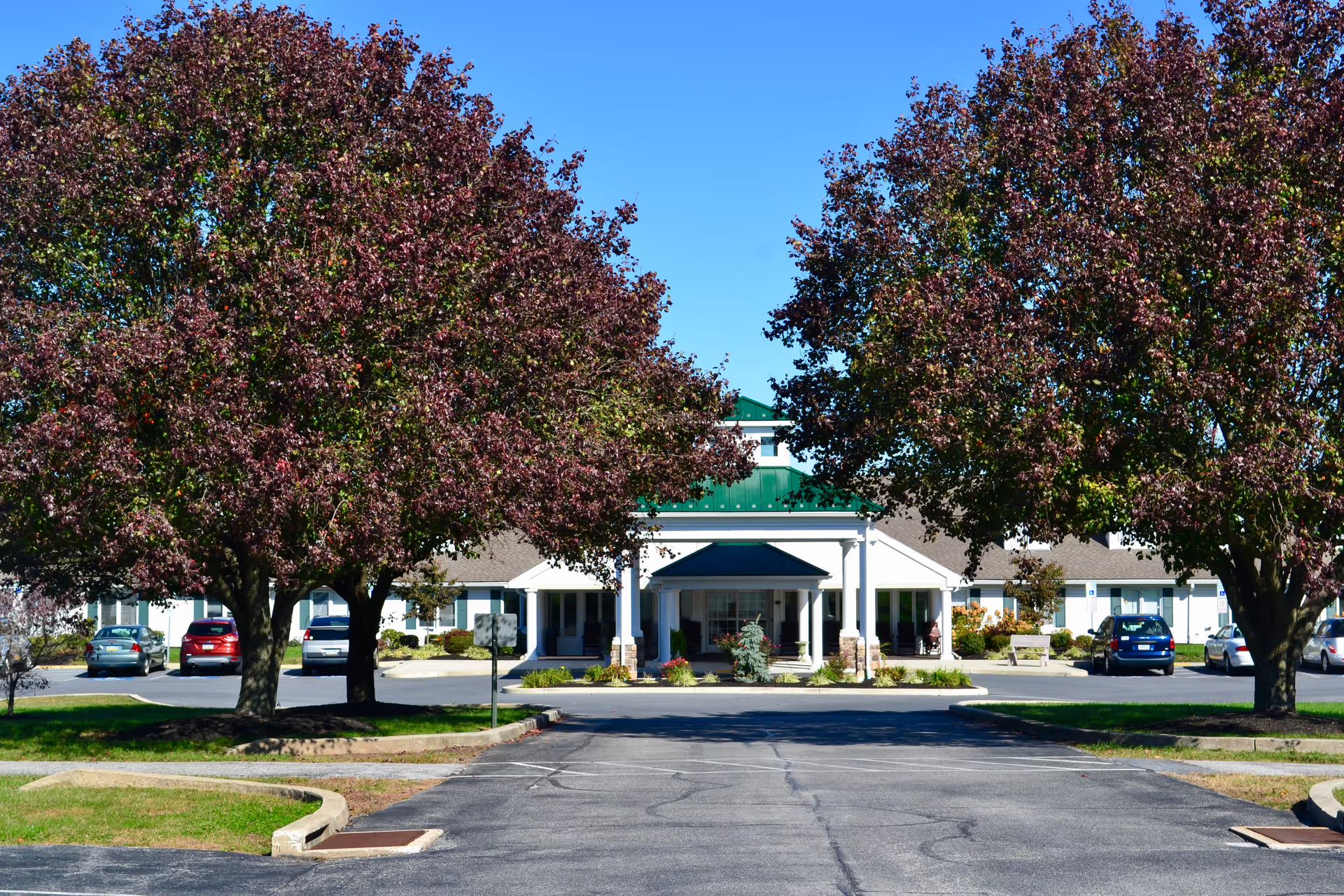
Reviews of Kingston Court Skilled Nursing and Rehabilitation Center are strongly polarized: a substantial number of families and residents describe high-quality rehabilitative care, compassionate direct-care staff, and an engaging communal environment, while another set of accounts raises significant operational and clinical concerns. The facility demonstrates clear strengths in short-term rehabilitation — physical and occupational therapy teams are frequently credited with helping residents regain mobility and independence. Many reviewers highlighted respectful CNAs and nurses, responsive admissions and front-desk personnel, reliable transportation, accessible Wi‑Fi, and a robust activities program that includes religious services, music, bingo, and social events.
Dining and activities are commonly praised: several reviewers described varied menus, the ability to request custom orders, and improvements in meal quality that approach restaurant standards in certain units. Activities and social programming are repeatedly cited as morale boosters and important contributors to residents' quality of life. Social work and discharge-planning support also received positive mention for facilitating transitions home and addressing individual needs.
Counterbalancing these positives are recurring operational weaknesses. A pattern of inconsistent staffing and variability between shifts was linked to delays in responding to call lights, missed personal-care tasks, and slow assistance after falls. Medication administration and clinical oversight emerged as a focal concern in multiple accounts, with descriptions of delayed or missed medications and unclear medication communication. There are also repeated concerns about dementia-care consistency and supervision for cognitively impaired residents.
Facility-management matters show mixed signals. Many reviewers praised cleanliness in rehabilitation areas and the professionalism of individual staff and leaders; others described uneven housekeeping, laundry delays, and problems managing residents' personal belongings. Infection-control and masking practices were identified as inconsistent in some instances. Communication with families — particularly around clinical changes, discharge planning, and emergency events — was noted to be uneven, and several families pursued regulatory complaints or raised allegations related to clinical management and property security.
Taken together, the reviews suggest Kingston Court is capable of delivering strong rehabilitation outcomes and offers several service-level advantages (therapy, activities, dining flexibility, and helpful admissions staff). However, variability in staffing, medication processes, dementia-care protocols, cleanliness in certain units, and family communication represent operational risks that prospective residents and families should evaluate. Recommended due diligence includes asking about current staffing ratios, medication-safety protocols, call-light response expectations, dementia-care procedures, infection-control policies, and how the facility documents and addresses family concerns and regulatory inquiries. Visiting multiple units at different times and speaking with current families can help assess whether the facility’s positive aspects are consistent with the level of care needed.