Pleasant Acres Nursing & Rehabilitation Center elicits strongly mixed impressions. Many families and visitors describe compassionate, committed nursing and support staff who form positive relationships with residents and respond well when present. Therapy teams, some nursing units, and the business/admissions office receive frequent praise for being helpful, communicative, and effective at coordinating short-term rehabilitation and paperwork. The facility also offers a range of recreational activities, holiday events, and outdoor spaces that several reviewers found beneficial to residents’ quality of life.
At the same time, a persistent theme across reviews is staffing instability. Chronic understaffing and reliance on agency personnel are associated with delays in responding to call lights, uneven assistance with activities of daily living, and gaps in hygiene and incontinence-care protocols. These operational shortfalls are most commonly reported during nights and certain shifts, and reviewers describe variability by floor and by shift rather than a consistent facility-wide standard of care.
Clinical practice concerns appear in several areas. Reviewers noted inconsistencies in medication administration documentation and occasional discrepancies in medication or dietary orders. Transfer and fall-prevention practices were sometimes described as uneven, contributing to safety concerns. Therapy and rehabilitation services are praised in many accounts for helping residents progress, but other families noted that program quality and intensity were inconsistent and that the facility is not always well-equipped for complex stroke recovery or other specialized needs.
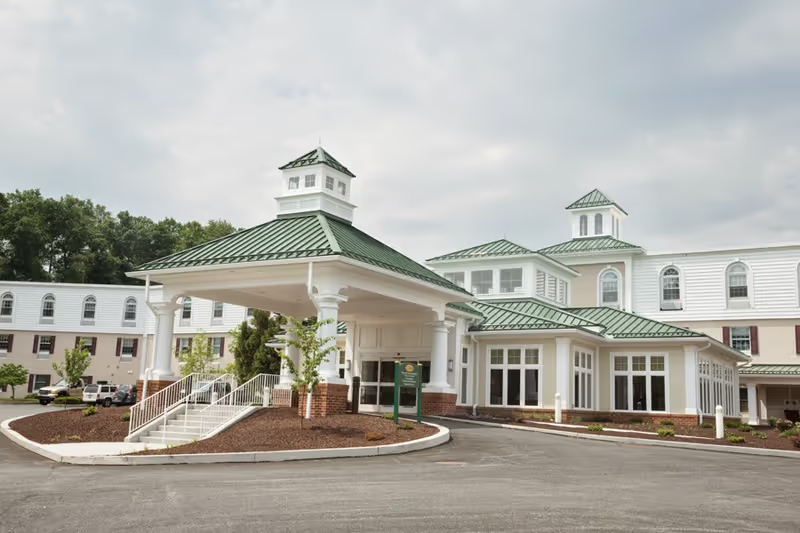
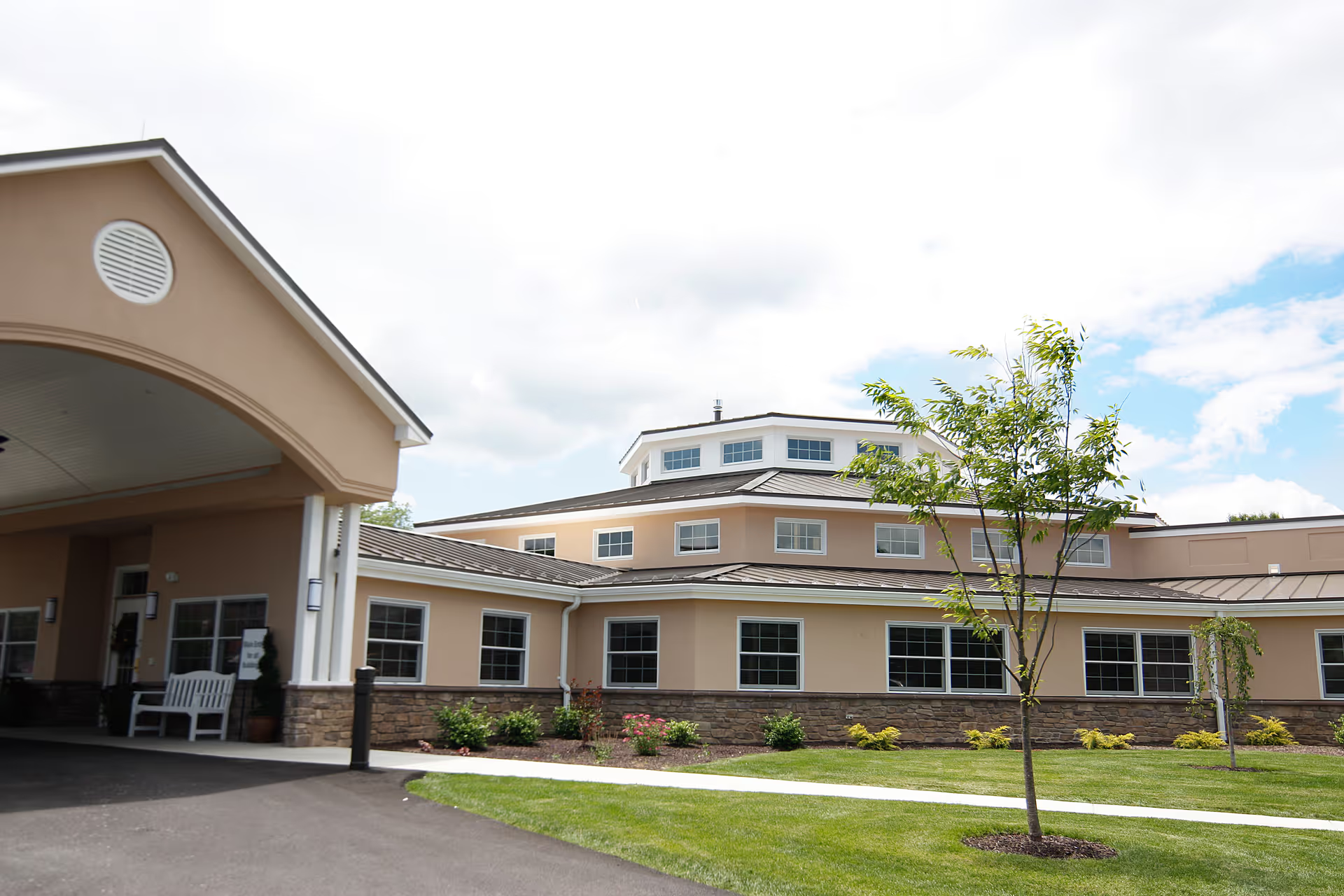
Housekeeping and environmental maintenance show a mixed picture. Portions of the building have been renovated and are described as clean and pleasant, with responsive maintenance staff who address room-level issues quickly. However, other units are described as having sanitation and odor concerns, inconsistent housekeeping, and crowded semi-private rooms. These differences appear to be unit- and shift-dependent rather than uniform across the campus.
Dining and activities are strengths for many residents: structured programs, crafts, outings, church services, and individualized meal accommodations are frequently mentioned. Conversely, some reviewers described late meals, cold food, or meal-service lapses, indicating inconsistency in food-service operations.
Management and administrative issues are another recurring theme. While the business office and some administrative staff receive specific commendations for efficiency and helpfulness, other reviewers reported poor communication, disorganized discharge planning, billing errors, lost personal items, and disputes over powers of attorney and financial-account changes. There are also a small number of serious claims, including allegations related to financial management and contested decisions; these have led some families to involve legal counsel or the ombudsman. Front-desk professionalism and visitor communication were uneven across reports, with some accounts of unhelpful or hostile interactions.
Notable patterns: experiences are highly variable across time, floors, and shifts. Several reviewers describe improvement over the past year, while others describe continuing operational problems. Positive accounts emphasize individual staff members or specific units where care is consistent; negative accounts tend to cluster around understaffing, cleanliness lapses, medication and documentation inconsistencies, and administrative/billing problems.
For prospective residents and families: arrange multiple daytime and evening visits, ask for current staffing ratios on the specific unit, review medication and transfer-safety protocols, inspect the specific room and nearby common areas, and request written policies on discharge planning and billing/POA procedures. Contact the local long-term-care ombudsman and review recent inspection reports to get a fuller picture of corrective actions and regulatory status before deciding.