The reviews for Commonwealth Memory Care at Cedar Bluff present a strongly mixed picture. Several families describe a well-maintained, odor-free facility with large, naturally lit rooms and useful on-site services such as laundry and hair care. Multiple accounts praise friendly, professional caregiving staff, family-friendly arrangements that allow spouses to remain together in memory-care settings, and periodic celebration-oriented programming (holidays, photos and memories). Home-cooked meals are noted positively by some residents and families.
At the same time, a substantial set of concerns centers on clinical staffing and operational reliability. A number of families reported understaffing, rapid staff turnover, and instances where caregiving staff lacked expected clinical training; these reports raise questions about medication-administration practices and clinical oversight. Several reviewers specifically described problems accessing licensed nursing staff or observing inconsistent medication handling, which indicates potential gaps in training protocols and clinical supervision.
Dining and daily-care routines show similar divergence. While some residents enjoy home-style meals, other families cited missed meals, limited menu variety, and a desire for fresher, garden-style offerings. Activity programming is likewise inconsistent in accounts: some reviewers appreciated celebratory events and positive social moments, whereas others described few daily activities and an overall low-engagement atmosphere for residents.
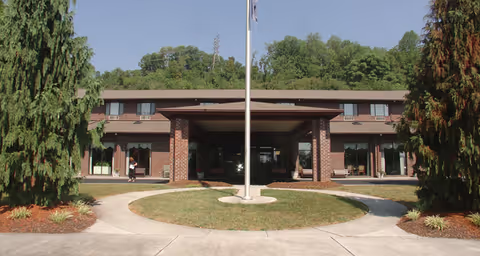
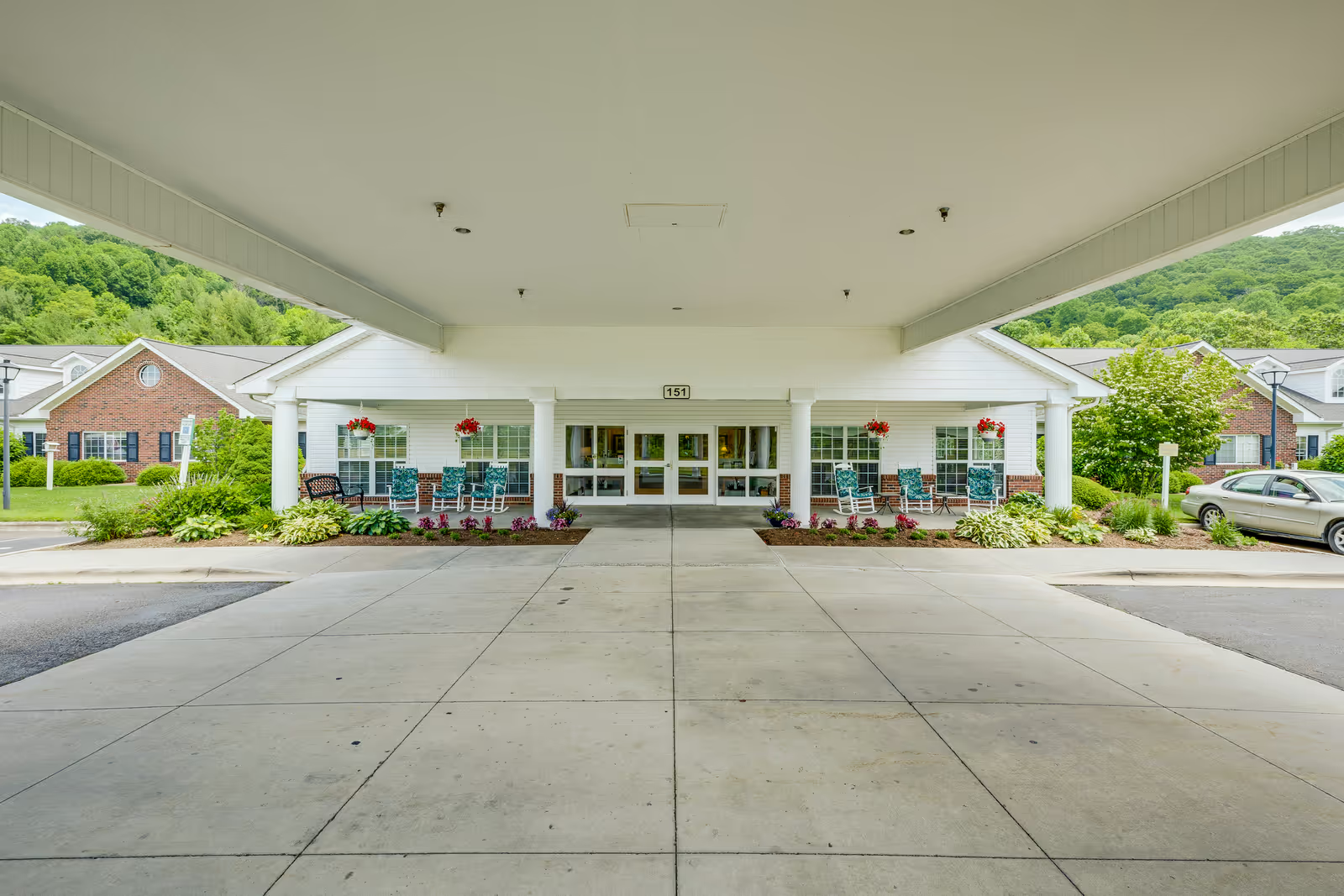
Facility conditions and management impressions are mixed. Many reviewers characterize the facility as clean and well-kept, but others raised sanitation and pest-control concerns in specific areas. Communication and management responsiveness emerge as recurring themes—some families found staff informative and helpful, while others experienced difficulty reaching staff, delayed callbacks, or perceived uncaring management responses.
Overall, the pattern is polarized: clear strengths in physical environment, certain staff relationships, and episodic programming coexist with operational weaknesses in staffing levels, clinical training, medication oversight, meal-service reliability, and consistent engagement. Prospective families would be prudent to probe staffing ratios, clinical oversight and medication policies, housekeeping and pest-control measures, meal schedules and menu options, and the facility’s activity calendar and family-communication processes to determine whether the facility’s strengths align with their expectations and clinical needs.