Tower Road Post Acute elicits sharply mixed impressions: many families and patients praise a core of highly skilled clinicians and compassionate front-line caregivers, while other accounts describe operational weaknesses that have materially affected care experiences. The facility demonstrates clear strengths in rehabilitative services and wound management; physical and occupational therapy teams repeatedly receive positive comments for helping patients regain mobility and return home. Several reviewers also highlighted individualized care plans, a welcoming activities program, and moments of highly responsive family communication from specific staff and leaders.
Clinical care shows a dual pattern. On the positive side, wound-care nurses, therapists, and some nurses and CNAs provide attentive, effective treatment and rapid functional gains for many patients. Conversely, reviews identify recurring issues in medication administration, clinical monitoring, and timely response to changes in condition—examples include missed or delayed medications, inconsistent vital-sign surveillance, and delayed pain management. There are also repeated accounts of interruptions to planned therapy (often tied to insurance appeals or administrative delays), which families link to slower recovery. Transfer-safety and toileting-assistance processes are another area of concern, with several accounts implying inadequate supervision or long waits for help.
Staffing and management appear uneven. A substantial number of reviews praise individual staff members by name and describe compassionate, family-focused interactions and excellent care coordination from certain leaders. At the same time, there are numerous descriptions of understaffing, poor night/weekend responsiveness, and variability in how managers handle complaints. Administrative issues—especially around billing, discharge timing, and holding rooms—are recurrent themes; some families described adversarial financial conversations or unexpected discharge logistics. There are also occasional escalated incidents involving personal-property disputes and law-enforcement involvement, which reviewers characterized as serious individual events.
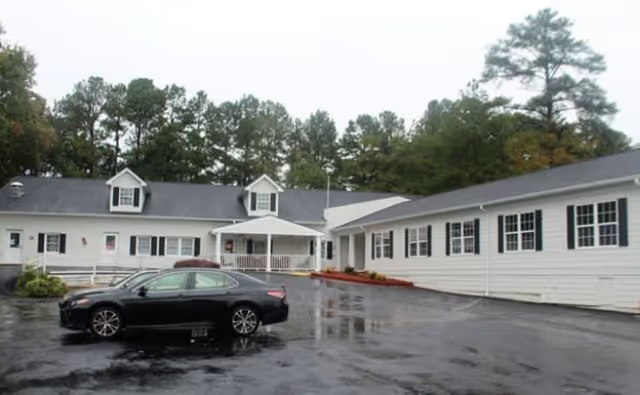
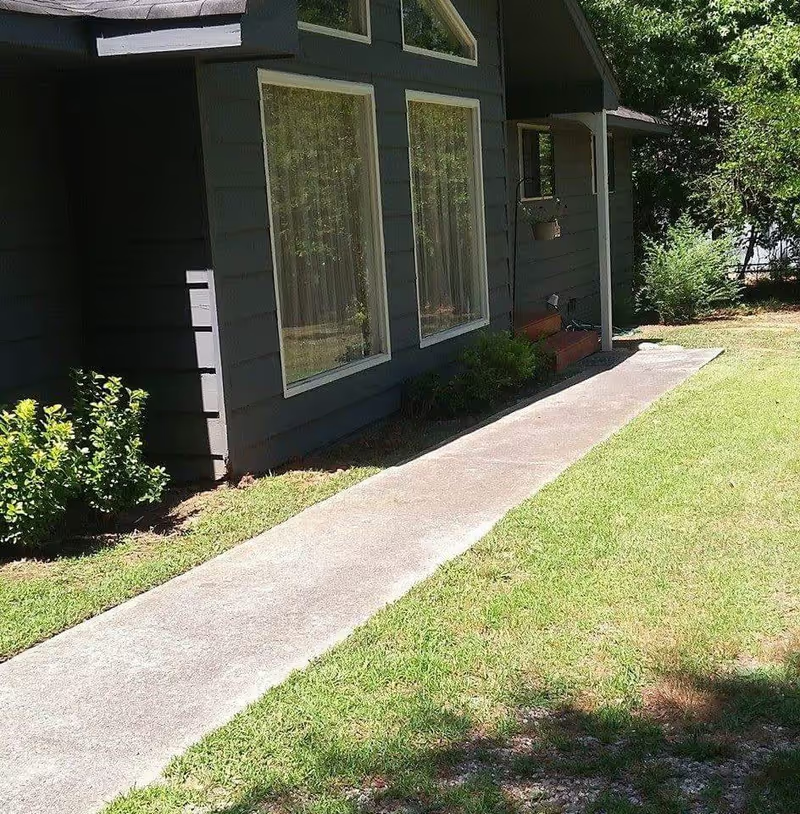
Facility, dining, and environmental observations are similarly mixed. Many reviewers find the building clean, well-kept, and comfortable, with pleasant outdoor areas, wide hallways, and functional safety features such as room call systems. Other reviewers describe sanitation concerns in specific rooms or bathrooms, intermittent odor concerns in parts of the building, and maintenance shortcomings (broken equipment, inoperable showers, aging fixtures). Dining receives both praise for individualized diets and criticism for inconsistent meal quality and perceived inadequacy of protein or portioning in some stays.
Notable patterns: positive outcomes are most strongly associated with residents receiving active, uninterrupted therapy and with direct engagement from proactive staff members or managers. Negative experiences cluster around understaffed shifts, administrative friction (billing, discharge, insurance), and variability in cleanliness and clinical monitoring. For prospective residents and families considering Tower Road, recommended due diligence includes asking about current staffing ratios (especially nights/weekends), medication-administration and monitoring protocols, continuity of therapy and prior authorization processes, property-inventory procedures, and how management documents and resolves complaints. The facility offers clear clinical strengths, particularly in rehab and wound care, but these are offset for some families by operational inconsistencies that can materially affect day-to-day care.