Overall impression: Smyrna Village Memory Care Community elicits a wide range of family experiences, with a clear pattern of improvement under recent ownership alongside continuing operational challenges. Many families describe a marked turnaround after management changes: leadership is frequently characterized as responsive, hands-on, and communicative, and caregivers are often praised for warmth, individualized attention, and dementia-aware approaches. Clinical supports such as on-site nurse practitioners and hospice involvement are viewed positively where present.
Care and staff: Staff performance is the facility's strongest theme. Numerous accounts highlight compassionate, patient-centered care, attentive personal-care routines (bathing, dressing, grooming) and staff who build personal relationships with residents. At the same time, reviewers identify inconsistent staffing levels and occasional delays in responsiveness — patterns that have contributed to concerns about missed care tasks and accountability during certain shifts. Families report both excellent clinical oversight in some cases and medication-management inconsistencies in others; prospective families should verify current clinical protocols, medication-administration procedures, and staffing ratios.
Dining and activities: Dining receives mixed but generally favorable remarks. Several families praise home-cooked meals, holiday dinners, and nutrition supplements for specific needs; others note limited menu variety, reliance on canned items, small portions, and restricted fresh fruit availability. Activity offerings vary by shift and by management era: there are consistent references to effective music programs, live-music events, nature walks and cognitively appropriate games that many residents enjoy, but there are also descriptions of promised activities not being consistently delivered or of programming that is limited to particular areas of the building. Confirming the current weekly activity schedule and sample menus is recommended during tours.
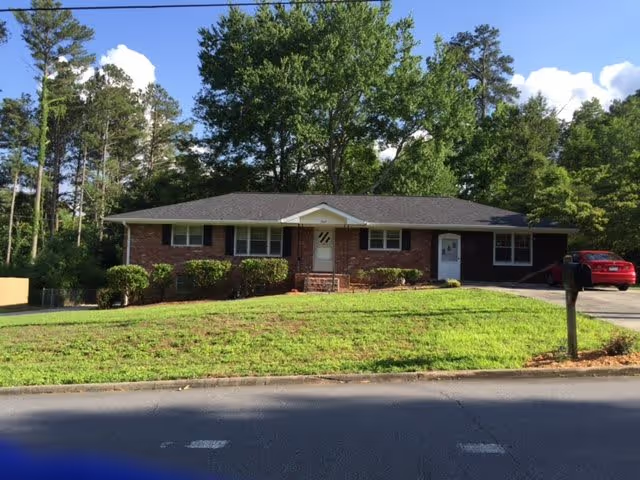
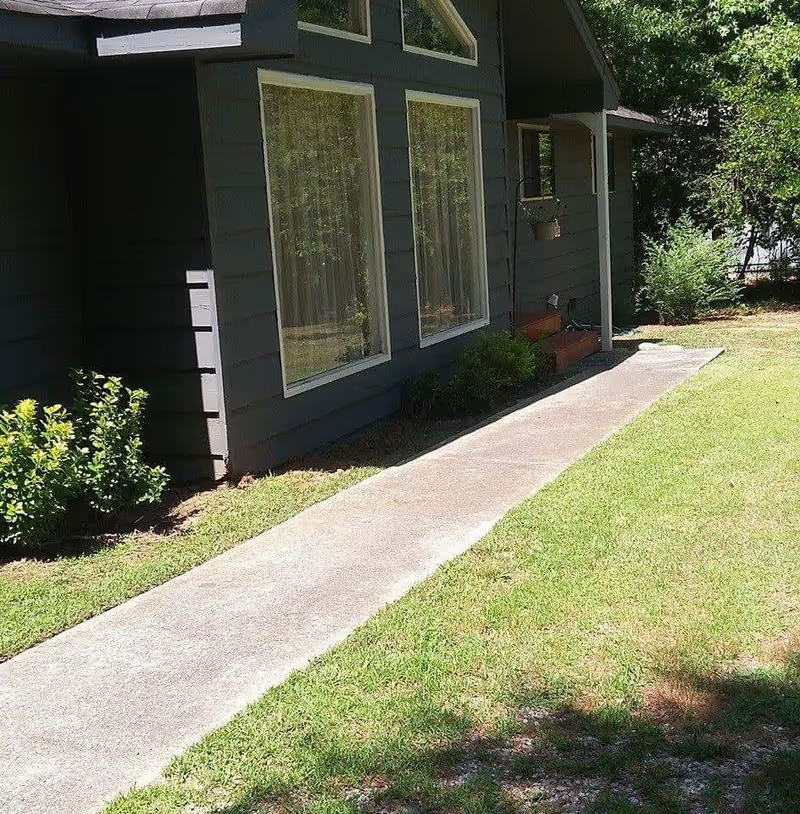
Facilities and operations: The physical plant is described as older but undergoing visible renovation — new flooring, painted walls, updated furniture, remodeled bathrooms and ultraviolet lighting have improved appearance and functionality for many families. Nevertheless, the facility retains structural constraints (two-story layout, some basement-like or smaller rooms), limited outdoor/garden space, and constrained parking. Sanitation and pest-control concerns are recurrent operational issues in several accounts; families should inquire about current cleaning schedules, pest-control contracts, and incontinence-care procedures. There are also reports of past infection-control events (including COVID and other outbreaks) that raised transparency questions; prospective residents should ask about current infection-prevention policies and recent incident history.
Management and notable patterns: One of the most consistent patterns is variability tied to ownership and management changes. Many families describe a near-complete “180-degree” improvement after new leadership instituted renovations, staff changes, and new programming. Conversely, some reviews reference earlier management lapses that led to serious family concern; a small number of descriptions involve allegations of significant incidents that contributed to trust issues. Communication is generally a strength under current management, but intermittent lapses in phone responsiveness, weekend tour availability, and follow-through on care-plan meetings are noted as operational gaps.
Recommendation for prospective families: Smyrna Village may be a good fit for families seeking an affordable, small, memory-care community with hands-on, relationship-oriented staff and active music-based programming — particularly under the facility’s newer leadership. Before committing, visitors should conduct an unannounced or extended visit to observe staff engagement across shifts; request written policies on staffing ratios, medication administration, infection control, cleaning/pest-control schedules, activity calendars, and sample menus; inspect room and bathroom configurations (private vs. shared); and confirm how care-plan meetings and family communications are managed. These steps will help determine whether current operational practices align with a prospective resident’s care needs and family expectations.